Pappadeaux Pasta Mardi Gras Recipe
This Pappadeaux Pasta Mardi Gras Recipe came out of a cold snap in late January, the kind that hits Texas every winter and catches everyone without a coat. My husband asked for something warm and heavy that same week.
I had eaten at Pappadeaux a few days earlier with my sister to celebrate her birthday. She ordered the Pasta Mardi Gras that night, and I stole three bites off her plate before my own food even arrived.
Mardi Gras season runs through February and into early March most years, depending on when spring lands. This dish shows up on menus in Cajun-style kitchens and New Orleans restaurants during that whole stretch, not only on the holiday itself.
My version skips a couple of things the restaurant does and adds a couple of my own touches for a regular grocery store. Grab a big skillet and clear the counter, since this comes together fast once prep is done.
What Is Pasta Mardi Gras?
Pasta Mardi Gras is a Cajun-Creole pasta dish built around linguine, shrimp, beef sausage, and a tomato cream sauce. The restaurant version also includes crawfish and cremini mushrooms, tossed together with garlic and a mix of Cajun spices.
What separates it from a standard Cajun pasta is the sauce. Most Cajun pasta recipes use a straight cream or Alfredo base. This one adds tomato, which changes the color to a pale orange-red and adds a sharper, tangier note under the cream.
The flavor lands somewhere between a seafood boil and a rich pasta dinner. Smoked paprika and Cajun seasoning give it heat and depth, while the cream and tomato smooth out the edges so it doesn’t taste like straight hot sauce.
This homemade version follows the same idea but isn’t a copy of Pappadeaux’s exact recipe, since that’s not published anywhere. I tested it against my own memory of the dish and adjusted from there, dropping crawfish for shrimp and chicken instead.
Tomato Cream Sauce vs. Cajun Alfredo
A plain Cajun Alfredo sauce is just cream, butter, and Parmesan with seasoning stirred in. Tomato changes that completely. It adds acid, a deeper color, and a slightly sweet note that plain Alfredo doesn’t have.
Cream does the balancing work here. Without it, the tomato would taste sharp and thin. The fat in heavy cream coats the tomato’s acidity and rounds it out, which is why this sauce tastes rich instead of tangy.
Search around for copycat versions of this dish and plenty of disagreement turns up. Some use penne instead of linguine, some swap chicken for crawfish, and a few skip the tomato entirely and call it Alfredo with Cajun seasoning.
The parts that actually matter for a recognizable result are the tomato cream base, the beef sausage, and the Cajun spice blend. Get those three right and the pasta shape or protein choice matters a lot less.
Ingredients for Pappadeaux Pasta Mardi Gras Recipe
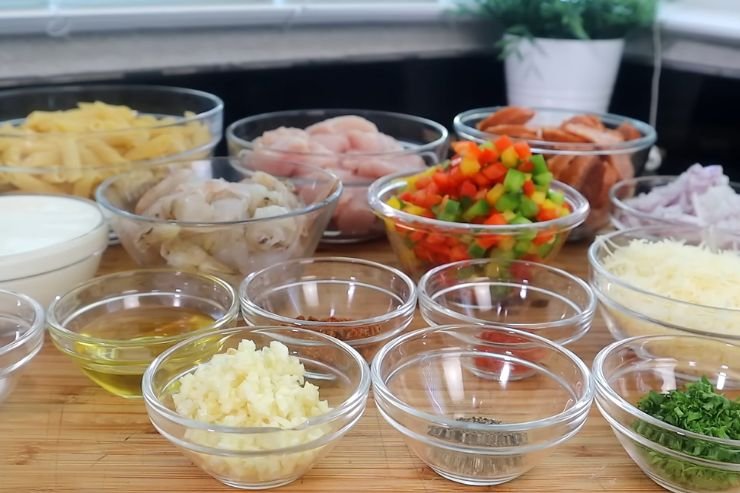
12 oz linguine: Linguine is the pasta shape used in the restaurant version, and its flat surface holds the tomato cream sauce better than a tube shape does. I reach for De Cecco when my store carries it.
Penne or fettuccine work well too, just watch the boil time since each shape cooks a little differently.
2 tablespoons olive oil, divided: This gets split between searing the chicken, shrimp, and sausage, so each protein browns instead of steaming in a crowded pan. Any plain olive oil works here, nothing fancy needed for cooking at this heat.
1 lb boneless chicken breast, cubed: Chicken adds bulk and a milder flavor that balances the spicier sausage and shrimp. I cut mine into roughly one-inch cubes so every piece cooks at close to the same rate.
Boneless thighs work well when you want a juicier bite, since they hold up better to a longer sear without drying out.
1 lb large shrimp, peeled and deveined: Shrimp brings the seafood flavor central to this dish and cooks in just a couple minutes. I buy the frozen bag from Kroger and thaw it under cold water before cooking.
8 oz beef sausage, sliced: Beef brings the smoky, peppery backbone that separates this from a plain shrimp pasta. A milder smoked sausage works when spice needs toning down, though the flavor turns less smoky.
½ red onion, diced: Onion builds a sweet base under the sauce once it softens in the pan. Red onion adds a little color along with the flavor, though a yellow onion works fine too.
1 each red, yellow, and green bell pepper, diced: The three colors add sweetness and a little bitterness from the green pepper, plus visual contrast in the dish. I dice these small so they cook through in the same 4 minutes as the onion.
4 cloves garlic, minced: Garlic goes in with the peppers and onion, adding sharpness that mellows once it cooks a couple minutes. Pre-minced jarred garlic works in a pinch, though fresh cloves give a stronger punch.
1 (14.5 oz) can diced tomatoes, drained: This is what turns a plain cream sauce into tomato cream sauce, adding acid and a deeper orange-red color. I drain mine so the sauce doesn’t turn watery.
Fire-roasted tomatoes add a smokier note when you want more depth in the finished sauce.
1 ½ cups heavy cream: Cream is what smooths out the tomato’s sharp edge and gives the sauce its rich body. I use Land O’Lakes heavy whipping cream since it holds up well over heat without breaking easily.
Half-and-half works for a lighter sauce, though it turns out thinner and needs a longer simmer to thicken back up.
¾ cup grated Parmesan cheese: Parmesan thickens the sauce as it melts and adds a salty, nutty note under the tomato and cream. I grate a wedge myself instead of using the pre-shredded bags, since those often turn grainy.
1 tablespoon Cajun seasoning, plus more to taste: This carries most of the spice and salt in the dish, along with garlic and onion powder depending on the blend. I use Tony Chachere’s, which most Louisiana kitchens keep on hand.
1 teaspoon smoked paprika: Smoked paprika adds a deeper, almost woodsy note that plain paprika doesn’t have, and it deepens the sauce’s color a shade further.
½ teaspoon black pepper: A basic seasoning layer that rounds out the heat from the Cajun blend without adding more salt.
Salt, to taste: Cajun seasoning already carries salt, so I add this slowly near the end and taste as I go instead of guessing upfront.
2 tablespoons chopped fresh parsley: Parsley goes on at the very end for color and a little fresh, grassy contrast against the rich sauce. Dried parsley works in a pinch, though it won’t look nearly as bright on the plate.
Equipment to Make Pasta Mardi Gras
- Large stockpot: for boiling pasta
- Large skillet or Dutch oven: holds sauce and proteins
- Tongs: turning shrimp and chicken
- Wooden spoon: stirring the sauce
- Colander: draining the pasta
- Chef’s knife and cutting board: prep work
- Measuring cups and spoons: accurate measuring
How I Make Pappadeaux Pasta Mardi Gras
1. Boil the Linguine: A big pot of salted water goes on the stove first. Once it’s boiling, I add the linguine and cook it until just al dente, about 9 minutes, then drain and set aside with a cup of the starchy water.
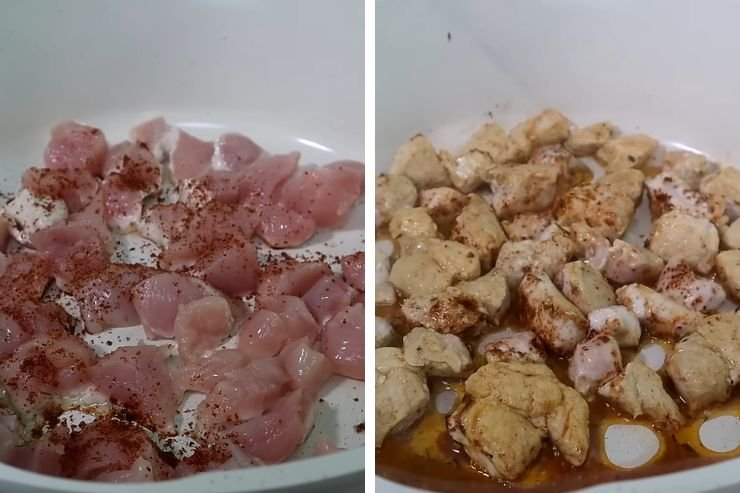
2. Sear the Chicken: My cast iron skillet gets a tablespoon of olive oil over medium-high heat, then the cubed chicken goes in with a sprinkle of Cajun seasoning. I cook it 6 minutes, turning once, until browned through.
Doneness cue: it should sound like a light sizzle, not a wet splatter, and turn opaque all the way through before I pull it.
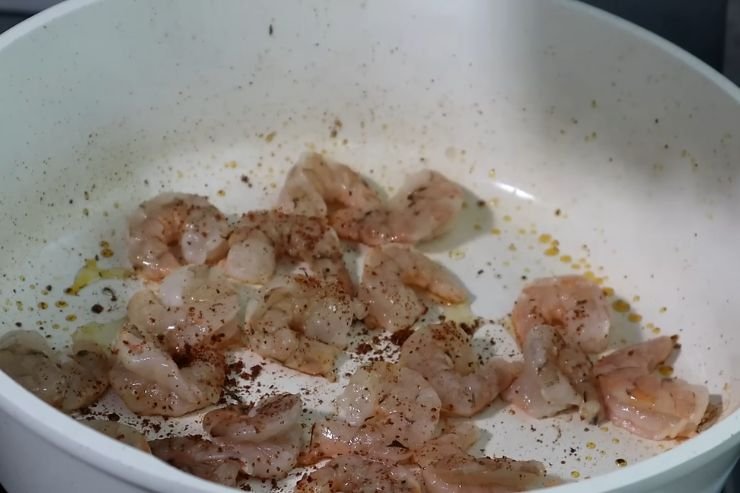
3. Cook the Shrimp: The same skillet gets a touch more oil, then the shrimp go in with another dash of Cajun seasoning. Two minutes per side is enough, until they turn that solid pink-orange color.
My first attempt left the shrimp in too long and they turned rubbery. Pull them the second they curl into a loose C shape, not a tight one.
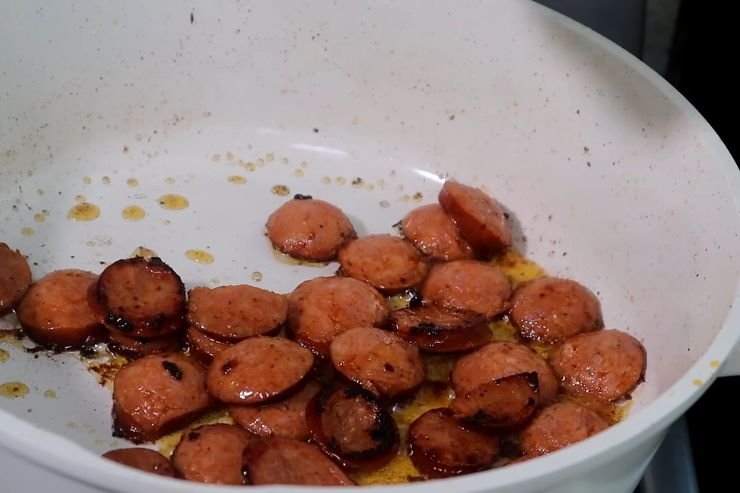
4. Brown the beef sausage: Sliced beef goes into the same pan next. I let it brown for 3 minutes, stirring occasionally so it colors evenly on both sides without burning.
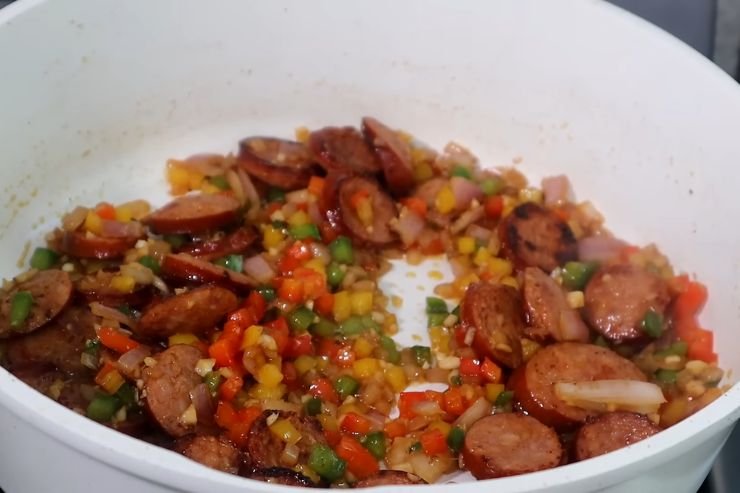
5. Soften the Vegetables: Onion, all three bell peppers, and the garlic go in together. Four minutes of stirring gets the peppers past their raw crunch while they still hold some shape.
6. Pour in the Cream: Heat comes down to medium here, then the heavy cream goes in. I scrape up the browned bits stuck to the pan bottom with a wooden spoon as it warms.
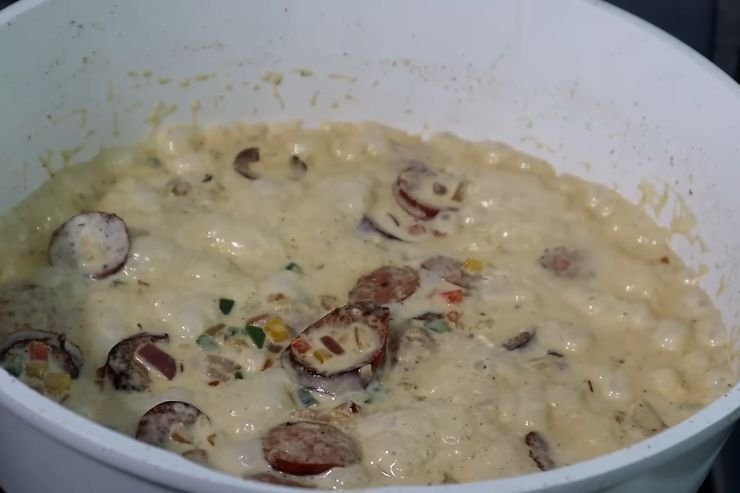
7. Stir in Tomatoes and Cheese: Diced tomatoes go in next, followed by the Parmesan. I stir until the cheese melts fully, about a minute, watching the heat closely so the dairy doesn’t separate.
Doneness cue: the sauce should look glossy and cling to the spoon, not grainy or broken apart.
8. Season and Combine: Smoked paprika, black pepper, salt, and any leftover Cajun seasoning go in next. I fold in the chicken, shrimp, sausage, and drained linguine, loosening the sauce with reserved pasta water when it looks too thick.
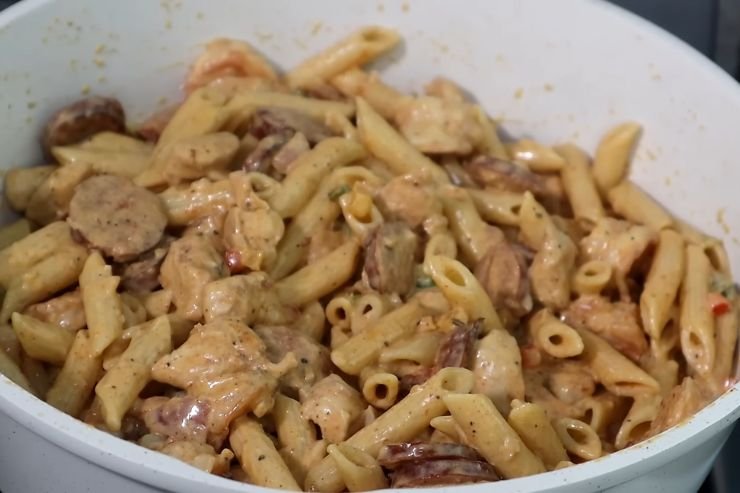
9. Finish with Parsley: Once everything is warmed through, about 2 minutes, the skillet comes off the heat. I scatter chopped parsley over the top right before serving straight from the pan.
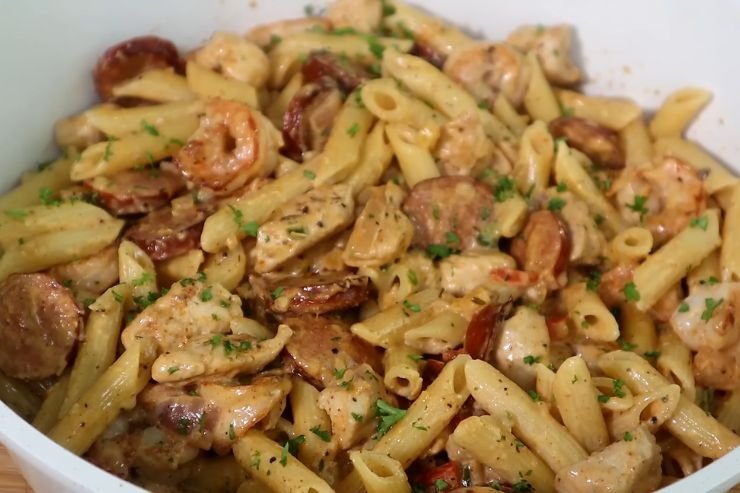
How This Compares to Other Cajun Pasta
Pappadeaux serves its Pasta Mardi Gras as linguine with crawfish, beef, and cremini mushrooms in a tomato cream sauce, topped with grilled shrimp. It sits on their permanent Cajun Specialties menu, not a holiday special.
Most generic Cajun pasta recipes online skip the tomato entirely and just call plain Alfredo Cajun-style. Others swap in chicken and skip beef completely, which cuts out most of the smoky depth. A few default to penne just because it’s already in the pantry.
This Pappadeaux Pasta Mardi Gras Recipe keeps the tomato cream base and the beef, which is what makes it read as Pasta Mardi Gras instead of a generic shrimp pasta with Cajun seasoning dumped on top.
Perfection Tips for Pappadeaux Pasta Mardi Gras Recipe
- Shrimp turning rubbery: pull them the moment they curl into a loose C, then move them straight into a bowl off the heat.
- Sauce curdling: keep the heat at medium once cream and cheese are in, and stir constantly instead of stepping away from the pan.
- Sauce too thick: stir in a splash of reserved pasta water, a tablespoon at a time, until it loosens back up.
- Sauce too thin: simmer uncovered for 2 more minutes to let the cream reduce and thicken naturally.
- Sauce tasting flat: add an extra half teaspoon of Cajun seasoning and a pinch of salt right before serving.
- Using crawfish instead: add cooked crawfish tails at the very end, off the heat, since extra cooking toughens them fast.
Pasta Mardi Gras Variations to Try
All Shrimp, No Chicken: Drop the chicken and double the shrimp to 2 pounds. This lands closer to Pappadeaux’s actual seafood-forward version, minus the crawfish.
All Chicken, No Seafood: Skip the shrimp completely and use 2 pounds of chicken instead. Good for a shellfish allergy or when shrimp prices spike at the store.
Spicier Version: Add a scant half teaspoon of cayenne and swap in a hotter beef brand. A few dashes of hot sauce at the table lets everyone adjust their own plate.
Milder Version: Cut the Cajun seasoning to 2 teaspoons and use a mild smoked sausage instead of beef. Better for kids or anyone sensitive to heat.
Lighter Version: Swap the heavy cream for half-and-half. The sauce turns out thinner and a bit less rich, so simmer it a minute or two longer to thicken back up.
Gluten-Free Version: Use a gluten-free linguine or fettuccine and double check the beef sausage label, since some brands use fillers with gluten.
What Dishes to Try With This Pasta Mardi Gras
Garlic bread is the easiest side here, since it soaks up the extra sauce left on the plate. A simple salad with a light vinaigrette cuts through the richness, and roasted vegetables like asparagus or squash round out the plate without competing with the Cajun spice. For a drink, a cold limeade balances the heat well, and a scoop of vanilla ice cream after dinner cools things down for anyone who piled on extra Cajun seasoning.
For a full spread, I’d set out garlic bread and a salad on the table before the pasta even comes off the stove, so everything lands warm at the same time.
Leftover sauce and protein reheat well over rice, or folded into a seafood soup base for a quick second meal. This dish doesn’t leave a ton of leftovers in my house, so I haven’t pushed the leftover angle much further than that.
Storing, Freezing & Reusing
Leftovers keep in the refrigerator for 3 days in an airtight container. Reheat gently in a skillet over low heat with a splash of cream or reserved pasta water, since the microwave tends to make the shrimp rubbery and the sauce grainy.
Freezing isn’t ideal here. The cream sauce separates once thawed, and the shrimp turns tough and stringy after a stint in the freezer. When you need to freeze something, freeze the sauce alone, without the pasta or proteins, then add fresh shrimp and cooked pasta after it thaws.
A dented saucepan on low heat with a lid cracked works better than a covered pot, since the cream needs slow, even heat to come back together without breaking.
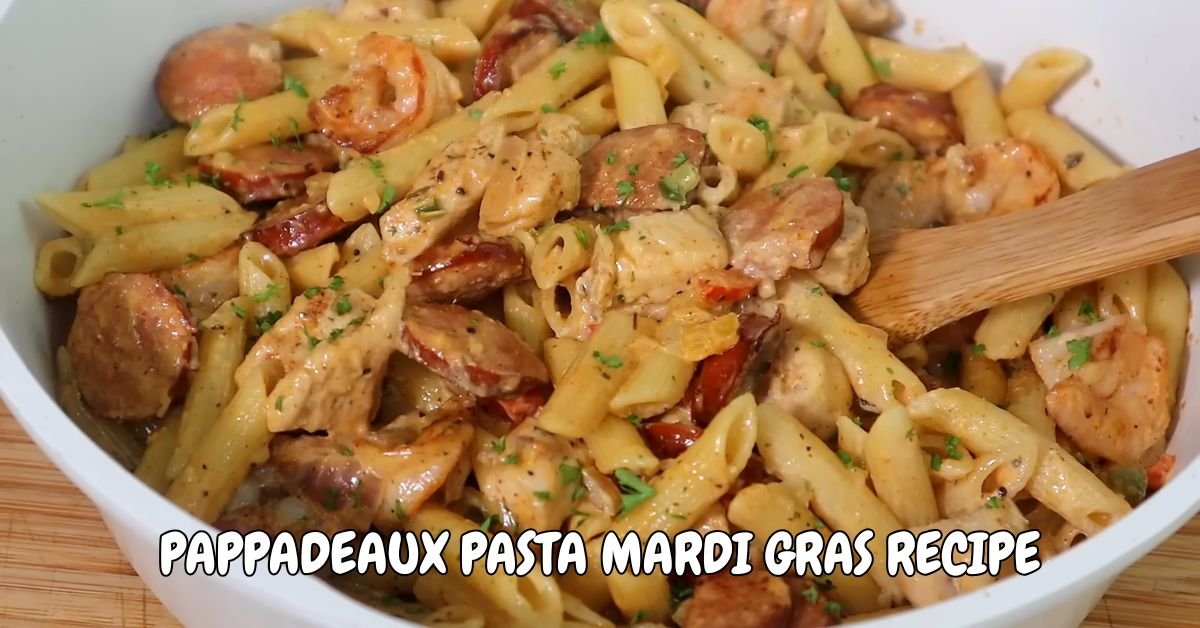
Pappadeaux Pasta Mardi Gras Recipe
Ingredients
Method
- A big pot of salted water goes on the stove first. Once it’s boiling, I add the linguine and cook it until just al dente, about 9 minutes, then drain and set aside with a cup of the starchy water.
- My cast iron skillet gets a tablespoon of olive oil over medium-high heat, then the cubed chicken goes in with a sprinkle of Cajun seasoning. I cook it for 6 minutes, turning once, until browned through.
- Doneness cue: it should sound like a light sizzle, not a wet splatter, and turn opaque all the way through before I pull it.
- The same skillet gets a touch more oil, then the shrimp go in with another dash of Cajun seasoning. Two minutes per side is enough, until they turn that solid pink-orange color.
- My first attempt left the shrimp in too long and they turned rubbery. Pull them the second they curl into a loose C shape, not a tight one.
- Sliced beef goes into the same pan next. I let it brown for 3 minutes, stirring occasionally so it colors evenly on both sides without burning.
- Onion, all three bell peppers, and the garlic go in together. Four minutes of stirring gets the peppers past their raw crunch while they still hold some shape.
- Heat comes down to medium here, then the heavy cream goes in. I scrape up the browned bits stuck to the pan bottom with a wooden spoon as it warms.
- Diced tomatoes go in next, followed by the Parmesan. I stir until the cheese melts fully, about a minute, watching the heat closely so the dairy doesn’t separate.
- Doneness cue: the sauce should look glossy and cling to the spoon, not grainy or broken apart.
- Smoked paprika, black pepper, salt, and any leftover Cajun seasoning go in next. I fold in the chicken, shrimp, sausage, and drained linguine, loosening the sauce with reserved pasta water when it looks too thick.
- Once everything is warmed through, about 2 minutes, the skillet comes off the heat. I scatter chopped parsley over the top right before serving straight from the pan.
Notes
This Pappadeaux Pasta Mardi Gras Recipe depends on three main elements: the tomato cream sauce, the beef, and a lot of Cajun seasoning. If you take out any of these, the dish will not have its true flavor.
My sister still asks for this one every February, and I’ve stopped pretending the crawfish is missed. The shrimp and chicken combo holds its own, and the sauce is the real reason people go back for seconds.