Pappadeaux Catfish Opelousas Recipe
I made this Pappadeaux Catfish Opelousas Recipe on a Sunday when my seafood order got canceled. My grandmother’s fifty-year-old cast-iron skillet came out instead.
Most home versions skip straight to a jarred Alfredo sauce and call it done. That skips the crawfish and shrimp that actually make Opelousas sauce what it is.
Pappadeaux Seafood Kitchen traces its Cajun roots back to a relative of founder H.D. Pappas, a Greek immigrant who came to Texas in 1897. Opelousas, the Louisiana city this dish is named for, sits in St. Landry Parish.
This Pappadeaux Copycat Recipe is my homemade version of that dish. I blacken the fish in a cast-iron skillet, then build the sauce in the same pan.
Why Is It Called Catfish Opelousas?
People assume Opelousas is only a place name, but it’s not that simple. Opelousas is also an old regional name for the flathead catfish.
The city itself sits in St. Landry Parish and dates back to 1720, making it one of Louisiana’s oldest cities. Cajun and Creole cooking both run deep there.
Pappadeaux likely leaned on both meanings when naming this dish. The catfish plays the starring role, and the sauce carries the region’s name.
Either way, the name points straight at the fish and the place that shaped the cooking style behind it.

Opelousas Sauce vs. Étouffée: Not the Same Thing
Home cooks often lump Opelousas sauce in with étouffée, since both are rich and Cajun. They’re built differently underneath.
Étouffée starts with a roux, flour cooked slowly in fat, which gives it a deeper, almost brown color. Opelousas sauce skips the roux entirely and builds its body from heavy cream and Parmesan instead.
That difference changes more than color. Roux-based sauces carry a toasty, nutty note that cream-based sauces never quite get.
Calling this dish an étouffée in front of a Louisiana cook usually gets a quick correction. The two sauces share a region, not a recipe.
Ingredients for Pappadeaux’s Catfish Opelousas
For the Catfish
1 pound of catfish fillets (2 large fillets): Use fresh Mississippi catfish for the best taste. If it’s not available, choose farm-raised catfish.
1 teaspoon Cajun or Creole seasoning: Add a touch of Louisiana flavor with options like Tony Chachere’s, Slap Ya Mama, or Chef Paul Prudhomme’s Seafood Magic.
½ teaspoon smoked paprika: This adds color and a smoky flavor to your catfish.
½ teaspoon black pepper: Use freshly ground black pepper for better flavor.
¼ teaspoon garlic powder: A little garlic powder adds a savory taste.
2 to 3 tablespoons avocado oil: This oil has a high smoke point, perfect for blackening the fish. You can also use vegetable oil.
1 tablespoon unsalted butter: Butter enriches the fish and helps it sear nicely.
For the Opelousas Sauce
½ cup holy trinity mix (diced onion, celery, and green bell pepper): This mix is common in Cajun dishes and can be found pre-diced in most grocery stores.
½ cup sliced mushrooms: Use baby bella or button mushrooms for tenderness and flavor.
1 teaspoon minced garlic: Fresh minced garlic is best, but garlic paste works in a pinch.
½ pound crawfish tail meat (pre-peeled and cleaned): Find it in the frozen section. You can substitute shrimp if you prefer.
¼ pound small shrimp, peeled and deveined: These shrimp add more seafood flavor. You can use crab meat for a sweeter taste.
1 cup heavy cream: This adds a rich, velvety texture to the sauce. You can use half-and-half for a lighter sauce, but it will be thinner.
¾ cup grated Parmesan cheese: This thickens the sauce and adds a nutty flavor. Hand-grated cheese melts better than pre-grated cheese.
½ teaspoon Cajun seasoning: This adds the classic Cajun flavor to the sauce.
½ teaspoon Old Bay seasoning: This adds an extra layer of flavor.
1 teaspoon garlic powder: This further boosts the garlic flavor.
½ teaspoon smoked paprika: This adds more depth of flavor.
½ teaspoon black pepper: Use this for final seasoning.
Salt to taste: Adjust according to your preference.
For the Dirty Rice
½ pound ground beef: Choose your preferred type for a rich flavor.
2 cups minute rice (instant rice): This rice cooks quickly and absorbs flavors well.
1 and ¾ cups chicken broth: This adds savory goodness to the rice.
⅓ cup holy trinity mix: This mix of diced onion, celery, and bell pepper enhances the dish.
1 to 2 bay leaves: These add a subtle earthy flavor. Remember to remove them before serving.
½ teaspoon Old Bay seasoning: This keeps the flavors consistent with the Opelousas sauce.
½ teaspoon garlic powder: A bit more garlic enhances richness.
½ teaspoon paprika: This adds color and mild sweetness.
1 teaspoon Cajun seasoning: This adds authentic Cajun flavor to the dish.
1 tablespoon unsalted butter: This adds richness and ties the flavors together.
Tools That Make This Recipe Easier
- Cast-iron skillet: Needed for a good blackened crust.
- Medium saucepan: For the Opelousas sauce.
- Large pot with lid: For the dirty rice.
- Sharp fillet knife: For clean cuts and prep.
- Wooden spoon or silicone spatula: To stir the sauce without scratching.
- Fish spatula: To turn fillets without breaking them.
- Measuring cups and spoons: To ensure accuracy.
Instructions to Make Pappadeaux Catfish Opelousas
1. Make the Dirty Rice: In a large pot, cook ground beef with chopped onion, bell pepper, and celery over medium heat until the beef is brown. Season with Cajun seasoning, Old Bay, garlic powder, and paprika. Add chicken broth and bring to a low boil.
Stir in minute rice and bay leaves, then mix in butter. Cover the pot, lower the heat, and simmer for 6-8 minutes. Take out the bay leaves, fluff the rice with a fork, and set it aside.

2. Prep the Catfish: Dry the catfish fillets with a paper towel. In a bowl, mix Cajun seasoning, paprika, garlic powder, and black pepper. Rub the mixture onto both sides of the fillets, then let them sit for 5 minutes.

3. Blacken the Catfish: Heat a cast-iron skillet over medium-high heat. Add avocado oil and butter. When the butter melts, place the seasoned catfish fillets in the skillet and cook for 5-6 minutes without moving them.
Flip the fillets and cook the other side for 3-4 minutes. Squeeze lemon juice over the top and cover loosely with foil.

4. Prepare the Opelousas Sauce: In the same skillet, lower the heat to medium and add chopped onion, bell pepper, celery, and mushrooms. Sauté for 3-4 minutes, then add minced garlic and cook for 30 seconds. Add crawfish and shrimp, season, and cook until the shrimp turn pink.
Pour in heavy cream, reduce the heat, and mix in Parmesan cheese. Cook until the sauce thickens, about 4-5 minutes. Adjust the seasoning if needed.

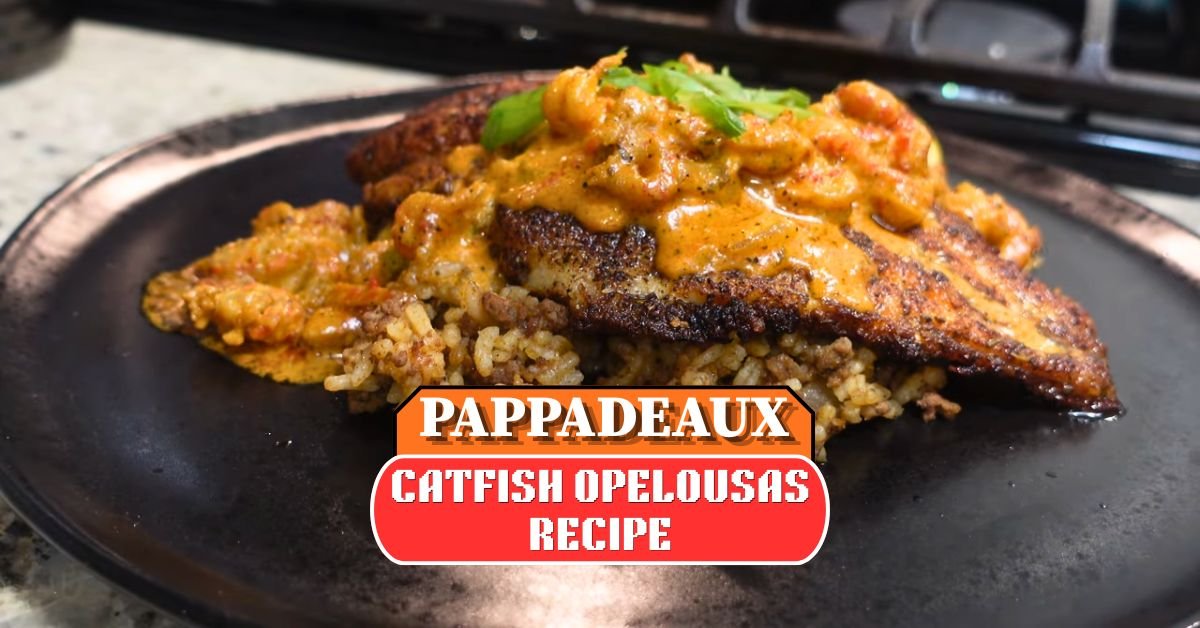
5. Plate the Dish: Spoon dirty rice onto a plate, add a blackened catfish fillet, and pour the Opelousas sauce over the top. Garnish with chopped green onions and a sprinkle of paprika. Serve immediately.

Pro Tips for Getting It Right
1. Catfish Sticks to the Pan: This happens when the skillet isn’t hot enough before the fish goes in. Let the oil shimmer for a full minute first.
2. Sauce Tastes Gritty: Pre-shredded Parmesan contains anti-caking starch that clumps under heat. Hand-grated cheese melts smoother every time.
3. Blackening Sets Off the Smoke Alarm: Crack a window and turn on the vent before starting. True blackening always produces heavy smoke, even done right.
4. Rice Turns Mushy: Too much broth or too long a simmer causes this. Check the rice at the six-minute mark, not after.
5. Crawfish Tastes Rubbery: Overcooking toughens crawfish fast. Add it near the end and cook only until it’s warmed through.
6. Sauce Looks Oily on Top: The cream separated slightly from too much stirring at high heat. Whisk in a spoonful of cold cream off the heat to bring it back.
Fun Ways to Switch It Up
Weeknight Rice Swap: I use plain instant rice instead of dirty rice on busy nights, since the Opelousas sauce carries enough flavor on its own. I make this when I’m short on time before a late practice pickup.
Lighter Version: Half-and-half replaces the heavy cream, and I cut the butter by half. The sauce thins out some but keeps most of the richness, good for a weeknight without heavy leftovers.
Cajun Pasta Bowl: I toss cooked linguine with the Opelousas sauce instead of spooning it over rice, then set the catfish on top. My wife asks for this version most, closer to a restaurant pasta plate.
Extra Seafood Version: I add jumbo shrimp and a handful of lump crab meat straight into the sauce. This one goes on the table for Mardi Gras, since it feels like more of a splurge.
Spicy Kick Version: An extra half teaspoon of cayenne in both the fish rub and the sauce turns up the heat without changing the other flavors. Good for anyone at the table who says the original is too mild.
Perfect Pairings for This Dish
Cornbread is my usual side, since it soaks up extra Opelousas sauce without turning mushy right away. Hush puppies work the same way, with a crispier bite.
For something with more crunch, Cajun-seasoned fries hold their own next to the rich sauce. Roasted green beans or charred asparagus cut the richness when I want a lighter plate.
A cup of gumbo makes a good starter for a bigger group. A simple salad with creamy dressing works too, without competing with the main dish.
On a Sunday, I set the table with cornbread, a wedge salad, and this catfish as the centerpiece. Everyone reaches for extra sauce before the rice runs out.
How to Store and Reheat Like a Pro
Catfish and sauce keep best in separate containers. The fish stays good for about 2 days in the fridge, sealed in an airtight container.
The Opelousas sauce holds for about 3 days, and dirty rice keeps a bit longer, up to 4 days sealed. Cooked catfish doesn’t freeze well, since it turns mushy once thawed and reheated.
The sauce freezes fine for up to a month once fully cooled first. Reheat it slowly in a saucepan over low heat, stirring often, with a splash of cream or broth to loosen it back up.
Warm the fish in a skillet with a little butter instead of the microwave, since the microwave turns the crust soggy fast. The sauce actually tastes better the next day, once the flavors settle.
Turning Leftover Catfish Opelousas Into Something New
Leftovers from this dish work best used within 2 days, while the fish still holds its texture.
Flake leftover catfish into the reheated Opelousas sauce and rice for a quick jambalaya-style bowl instead of plating everything separately. It comes together faster than the first time around.
Leftover dirty rice also makes a solid base for a fried rice riff. Crisp it in a hot pan with a little butter and a fried egg on top.
Pappadeaux Catfish Opelousas Recipe FAQs
1. Can I Use a Different Fish Instead of Catfish?
Tilapia or trout both work well, though catfish holds up best to the blackening heat without falling apart.
2. Can I Make This Without a Cast-Iron Skillet?
A heavy stainless steel pan works in a pinch, though it won’t hold heat quite as evenly as cast iron.
3. How Spicy Is This Dish?
The heat stays mild to medium with standard Cajun seasoning. Add cayenne to the fish rub or the sauce for more kick.
4. Is This Recipe Gluten-Free?
Mostly yes, though check your Cajun seasoning blend for added flour or fillers, since some brands include them.
5. Can I Make This Dairy-Free?
Swap the heavy cream for full-fat coconut milk and skip the Parmesan, though the sauce loses some of its thickness and turns slightly sweeter.
6. What’s the Best Side If I’m Skipping Dirty Rice?
Plain white rice or a simple potato mash both work, since the Opelousas sauce carries most of the flavor on its own.
Pappadeaux Catfish Opelousas Recipe
Ingredients
Method
- In a large pot, cook ground beef with chopped onion, bell pepper, and celery over medium heat until the beef is brown. Season with Cajun seasoning, Old Bay, garlic powder, and paprika. Add chicken broth and bring to a low boil.
- Stir in minute rice and bay leaves, then mix in butter. Cover the pot, lower the heat, and simmer for 6-8 minutes. Take out the bay leaves, fluff the rice with a fork, and set it aside.
- Dry the catfish fillets with a paper towel. In a bowl, mix Cajun seasoning, paprika, garlic powder, and black pepper. Rub the mixture onto both sides of the fillets, then let them sit for 5 minutes.
- Heat a cast-iron skillet over medium-high heat. Add avocado oil and butter. When the butter melts, place the seasoned catfish fillets in the skillet and cook for 5-6 minutes without moving them.
- Flip the fillets and cook the other side for 3-4 minutes. Squeeze lemon juice over the top and cover loosely with foil.
- In the same skillet, lower the heat to medium and add chopped onion, bell pepper, celery, and mushrooms. Sauté for 3-4 minutes, then add minced garlic and cook for 30 seconds. Add crawfish and shrimp, season, and cook until the shrimp turn pink.
- Pour in heavy cream, reduce the heat, and mix in Parmesan cheese. Cook until the sauce thickens, about 4-5 minutes. Adjust the seasoning if needed.
- Spoon dirty rice onto a plate, add a blackened catfish fillet, and pour the Opelousas sauce over the top. Garnish with chopped green onions and a sprinkle of paprika. Serve immediately.
Season each part on its own, taste as you go, and don’t skip the resting time on the fish before plating. That sequence is what actually holds this dish together.