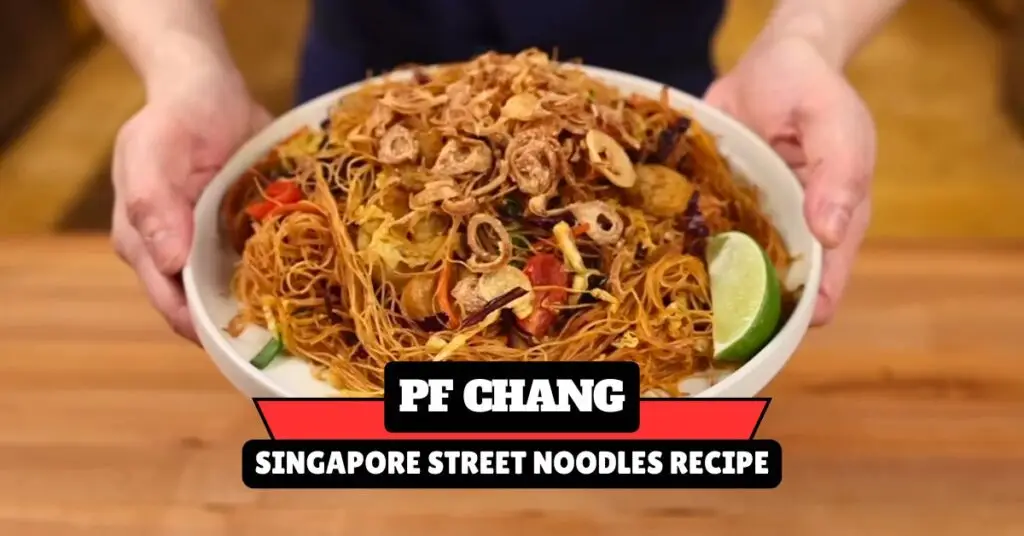
When I think about family dinners from my childhood, noodles were always a favorite. Everyone looked forward to them. We kept it simple back then: just butter and a little garlic. Over time, we wanted bolder flavors and more exciting dishes. That’s how the PF Chang Singapore Street Noodles Recipe became a regular dish for us.
This meal has the right balance of comfort and flavor. It’s sweet, savory, and lightly spicy enough to be interesting without being too much for anyone. I love how easy it is to make. You don’t need complicated skills, and you can easily use chicken, shrimp, tofu, or your favorite veggies.
The noodles turn out perfectly tender, covered in a shiny sauce that sticks to each bite. You get nice textures from crunchy veggies and juicy protein. It’s warm, comforting, and just the kind of dish that makes you want to grab a fork and dive in right away.
What Are PF Chang’s Singapore Street Noodles?
This Singapore Street Noodles is a stir-fried dish made with thin rice vermicelli and a flavorful golden curry sauce that includes cabbage, green onions, and your choice of protein, usually chicken and shrimp together. The unique sauce combines curry powder, soy sauce, oyster sauce, and a bit of Sriracha, giving it a savory, slightly spicy, slightly sweet flavor.
Interestingly, Singapore noodles did not originate in Singapore. Most food historians believe they were created in Hong Kong, likely inspired by the flavors and spice trade of Southeast Asia. In Singapore, you won’t find this dish on menus by that name, as locals do not claim it as their own.
PF Chang’s version leans more towards American-Chinese cooking than traditional Singaporean cuisine. It is tasty and worth ordering at the restaurant. You can usually find it listed under noodles or rice dishes, but availability may vary by location and season.
How This Copycat Compares to the Original
These noodles use thin rice vermicelli and a curry-based sauce, making them different from lo mein and chow mein. Lo mein uses thick wheat noodles with a savory soy sauce, while chow mein is pan-fried until crispy. The texture and flavor vary greatly. Singapore noodles are lighter and have a delicate taste with a distinct golden curry color.
Compared to Pad Thai, Singapore noodles are less sweet and tangy. Pad Thai uses tamarind and fish sauce, while Singapore noodles rely on curry powder and soy sauce. Both dishes use rice noodles, but their overall tastes are quite different.
Many reviews state that PF Chang’s version is lighter and less oily than typical takeout. Diners appreciate the balance of curry flavor and other sauces; it is bold but not overpowering. Some consider it one of the best noodle dishes on the menu.
What Makes This the Best Copycat Version
Many copycat recipes fail because they add dry curry powder directly to the wok. PF Chang’s differs by using a premixed curry sauce that evenly coats the noodles, preventing clumps and grease, which are common issues in homemade takeout meals.
Restaurants often soak their chicken and shrimp in an alkaline brine, which makes the proteins tender and gives them a slightly bouncy texture. Many home cooks skip this step, which can make their dishes less appealing.
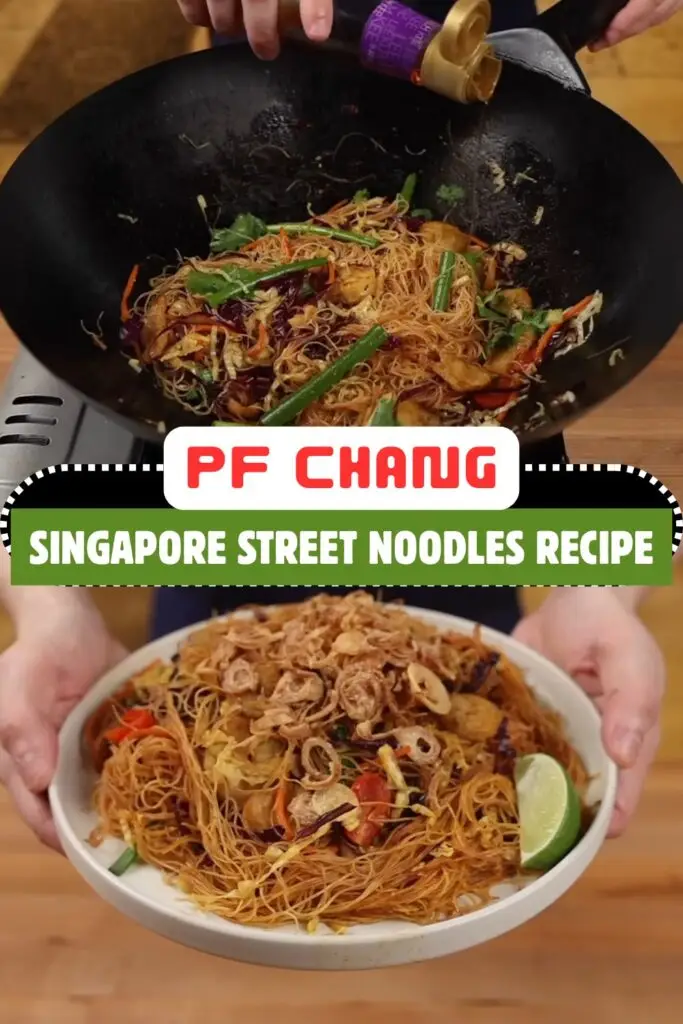
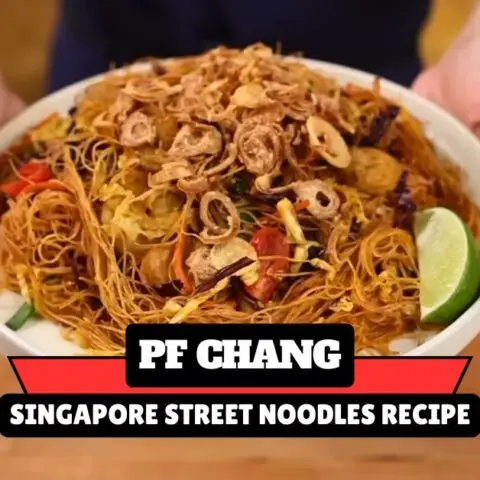
This PF Chang Singapore Street Noodles recipe addresses these issues. The noodles should look golden and glossy, completely covered in sauce with no dry spots. They should smell warm and savory with a hint of curry. The vegetables should be soft but still crunchy.
When you add the sauce to a hot wok, it should sizzle and slightly reduce, sticking to the noodles instead of pooling at the bottom. Making this dish at home costs less than ordering from a restaurant, and you can customize every part to your taste.
Ingredients for PF Chang Singapore Street Noodles
Thin Rice Vermicelli (4 oz dried): For this dish, use the thinnest rice vermicelli, slightly thinner than angel hair pasta. Do not use mung bean thread or glass noodles, as they will affect the texture. Use loosely packed noodles. Soak 4 oz of rice vermicelli to yield 8 oz, which is enough for one serving.
S&B Oriental Curry Powder (4 tsp): This is a mild Japanese curry powder, likely what PF Chang’s uses. It has a good flavor without being too strong or spicy. You can find it at most Asian grocery stores. If you can’t find it, regular curry powder from the spice aisle works well.
Turmeric (¼ tsp): This gives the noodles a golden color and adds a subtle earthy note without significantly altering the overall flavor.
White Vinegar (1½ tbsp): This adds brightness to the sauce and balances the soy sauce’s saltiness.
Light Soy Sauce (5½ tbsp): Use a good-quality light soy sauce. Lee Kum Kee’s low-sodium version in the green bottle is what the restaurant uses. It is less intense than regular soy sauce, allowing other flavors to come through. A low-sodium tamari also works for a different depth of flavor.
Oyster Sauce (5½ tbsp): This rich, sweet sauce brings everything together. It is thick and shiny, which helps it stick to the noodles. You can use hoisin sauce instead, but it is sweeter. For a vegetarian option, use mushroom-based oyster sauce.
Sriracha (1½ tbsp): This adds heat. Adjust the amount based on your spice preference. Sambal oelek can also work for a chunkier texture.
Ketchup (2 tbsp): This may seem unusual, but it adds sweetness and body to the sauce, balancing the curry and soy sauce nicely.
Baking Soda (½ tsp): Used in the protein marinade. It makes the water alkaline, tenderizes chicken, and gives shrimp a bouncy texture.
Chinese Light Soy Sauce (⅓ cup for the marinade): The same Lee Kum Kee low-sodium soy sauce as in the curry sauce, specifically for brining the protein.
Water (1 cup, for the brine): This mixes with baking soda and soy sauce to create the alkaline marinade.
Boneless Skinless Chicken Breast (3 oz per serving): Slice thin, about ⅛ inch, so it cooks quickly and evenly. Turkey breast can also work if chicken is unavailable.
Shrimp (3 oz per serving, 41/50 count): Smaller frozen shrimp work best, as they cook quickly and blend well with the noodles. Larger shrimp might overpower the dish. Bay scallops are another seafood option.
Green Cabbage (4 parts, finely shredded): This adds bulk, crunch, and mild sweetness. Napa cabbage works for a softer bite.
Red Cabbage (4 parts, finely shredded): This adds color contrast and a firmer texture. Thinly sliced bok choy is also an option.
Carrots (1 part, finely shredded): This adds sweetness and color. Julienned bell peppers can also work.
Grape Tomatoes (⅓ cup, halved): These add bursts of juiciness. You can also use cherry tomatoes, cut in half.
Dehydrated Minced Garlic (1 tsp, rehydrated): PF Chang’s uses rehydrated dried garlic in their stir-fries. Soak in warm water for 20-30 minutes, then drain and squeeze dry. Fresh minced garlic is also fine; use about 2 cloves.
Green Onion Sticks (½ cup): Cut into 1-2 inch pieces and add near the end for freshness.
Cilantro (¼ cup): Add this at the end for freshness and color. Flat-leaf parsley works if you’re not a cilantro fan.
Toasted Sesame Oil (1 tsp): Drizzle in at the end of the heat to add a nutty aroma. Do not cook with it, as heat will ruin the flavor.
Neutral Oil: Use for stir-frying and frying. Vegetable oil or canola oil works well.
Fried Shallots: Use these for garnish to add crunch and a slightly sweet, savory topping. Store-bought fried shallots are fine.
Lime Wedge: Serve with a lime wedge. A squeeze of lime just before eating brightens the dish.
Kitchen Tools You’ll Need
- Wok: Best for stir-frying at high heat.
- Tongs: Important for handling delicate rice noodles.
- Large mixing bowl: Use for soaking noodles and mixing sauce.
- Small whisk: Mix sauce ingredients smoothly.
- Kitchen towels or paper towels: For drying soaked noodles.
- Knife and cutting board: Use for cutting proteins and vegetables.
- Kitchen thermometer: Checks the oil temperature for frying.
- Colander or fine mesh strainer: Drains noodles after soaking.
- Covered container: Stores prepped ingredients in the fridge.
- Scissors: Cuts long noodles into easier-to-handle pieces.
How to Make PF Chang Singapore Street Noodles
1. Soak the Noodles: Soak 4 oz of dried thin rice vermicelli in room-temperature water for 30 minutes until they are mostly clear and soft. Drain, pat them dry, and cut into shorter pieces. If you prepare them ahead of time, store them in a covered container in the fridge.
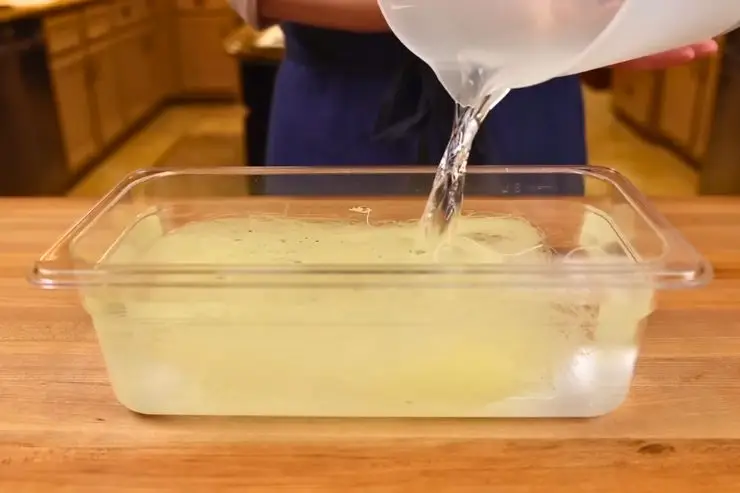
2. Mix the Curry Sauce: In a bowl, whisk together 4 tsp curry powder, ¼ tsp turmeric, 1½ tbsp white vinegar, 5½ tbsp light soy sauce, 5½ tbsp oyster sauce, 1½ tbsp Sriracha, and 2 tbsp ketchup until smooth. You can keep this sauce in the fridge for weeks. Mix 1 cup of water with ½ tsp baking soda until it dissolves, then add ⅓ cup light soy sauce.
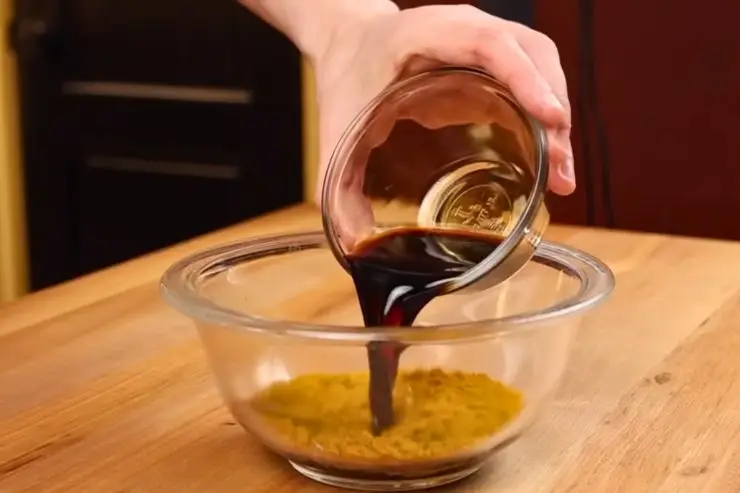
3. Prep and Marinate the Chicken and Shrimp: Slice the chicken breast into strips and marinate in the alkaline solution for 2 to 24 hours to tenderize. Thaw frozen shrimp in the marinade for 30 minutes to 1 hour, then drain and dry. Soak 1 tsp dehydrated minced garlic in warm water for 20 to 30 minutes, then drain.
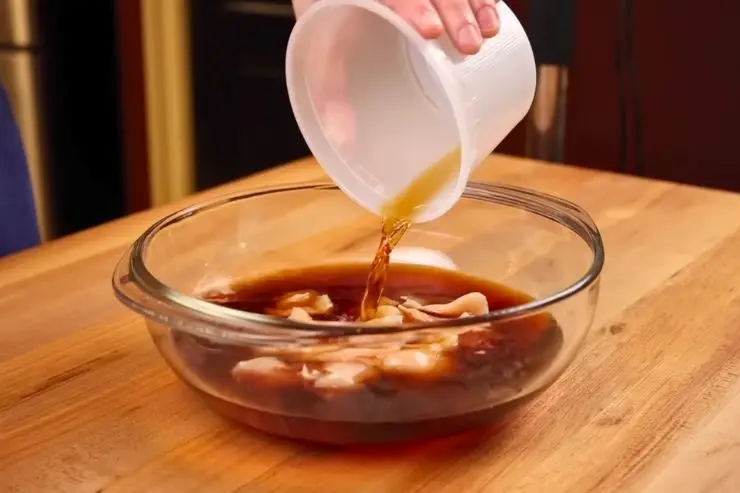
4. Make the Cabbage Mix: Combine 4 parts shredded green cabbage, 4 parts shredded red cabbage, and 1 part shredded carrots, then refrigerate.
5. Cook the Protein: Heat oil to 300°F and fry the chicken for 60 to 90 seconds. Next, add the shrimp and cook them together for another 1 to 2 minutes. You can also stir-fry them in a small amount of oil.
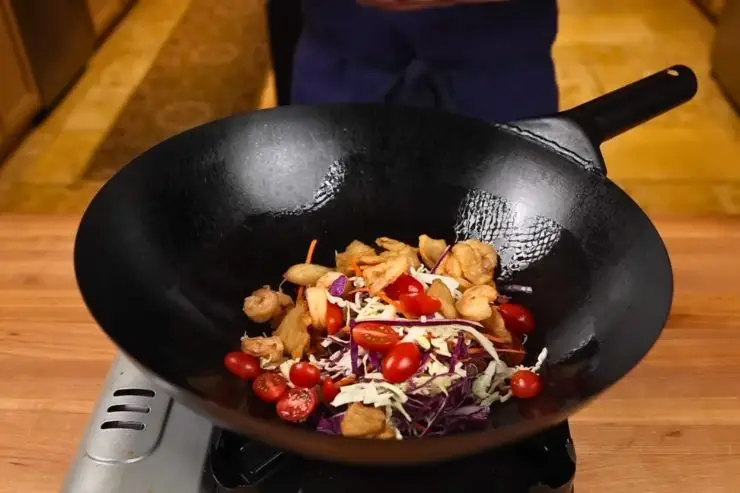
6. Stir-Fry Everything Together: In a heated wok, add 1 tbsp oil and 1 tsp rehydrated garlic. Stir-fry 2 cups of cabbage mix, grape tomatoes, chicken, and shrimp for 10 to 15 seconds.
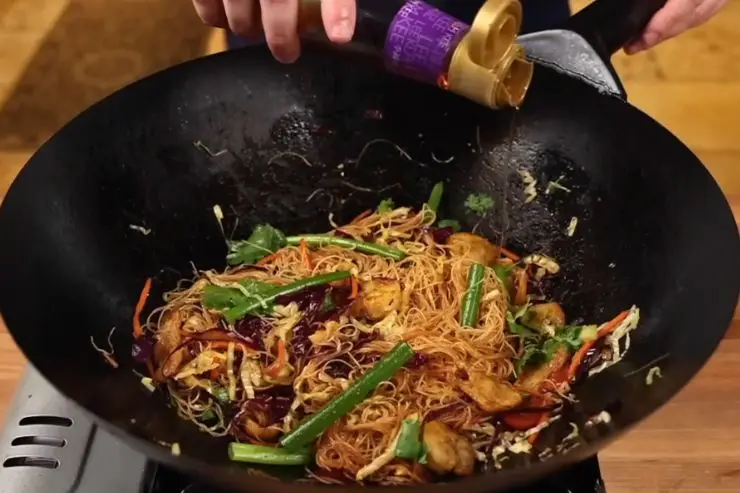
7. Add Noodles and Sauce: Add 8 oz of soaked noodles and 6 tbsp of curry sauce to the wok. Toss them until well coated, adjusting the heat as needed. Mix in ½ cup green onion and ¼ cup cilantro for 15 to 20 seconds. Drizzle 1 tsp toasted sesame oil, toss again, and serve topped with fried shallots and a lime wedge.
Flavor Fixes & Cooking Troubleshooting
Doesn’t taste like PF Chang’s: The curry powder may be the culprit. S&B Oriental Curry Powder is milder and more balanced than most. If you use regular curry powder, it will have a stronger, earthier flavor. Start with a little less and adjust to your preference.
Dish is too salty: If a dish is too salty, you can fix it by adding a little ketchup or water. Ketchup adds sweetness, helping balance the saltiness without altering the overall flavor too much.
The dish is too bland: If you want more flavor, add more curry powder or a few drops of Sriracha. Use about 6 tablespoons of sauce for each serving. If you use less sauce, the noodles might not taste good.
Too spicy dish: Use less Sriracha next time. You can use as little as ½ tablespoon for good flavor. Adding more ketchup can also help lower the heat.
Soggy noodles: they happen when they aren’t dried enough before cooking. After soaking them, spend extra time patting them dry. Add the sauce slowly while tossing the noodles to keep them from getting soggy.
Breaking Down the Curry Sauce
The sauce is the key part of this dish. It combines curry powder and turmeric with white vinegar and light soy sauce. When you add oyster sauce, Sriracha, and ketchup, you get a savory, slightly sweet, mildly spicy, warm golden flavor. Use more soy and oyster sauce than curry powder, which should be a subtle background flavor.
PF Chang’s probably uses S&B Oriental Curry Powder, which is milder than Indian types. If you’re using regular grocery-store curry powder, start with less and adjust to your taste.
For the best flavor, try a Japanese-style curry blend with a good quality light soy sauce, like Lee Kum Kee’s low-sodium version in the green bottle.
Dietary Swaps & Custom Variations
For a vegetarian or vegan dish, skip the chicken and shrimp and use firm, cubed tofu for protein. Replace oyster sauce with a mushroom-based option, and make sure your soy sauce is vegan-friendly. If you want a gluten-free meal, use rice vermicelli and switch regular soy sauce for certified gluten-free tamari, along with a gluten-free oyster sauce.
For a low-carb or keto meal, swap rice vermicelli with shirataki or zucchini noodles. Adjust the Sriracha for spice: use ½ tablespoon for mild and 2–3 tablespoons for heat. You can add toppings like fried shallots, crushed peanuts, sliced red chili, or chili oil. Consider serving a soft-boiled egg on the side.
To make the dish lighter, use less oil and stir-fry the protein instead of deep-frying it. This way, it stays flavorful without being too rich.
Creative Ways to Use Leftovers
You can turn leftover PF Chang Singapore Street Noodles into a new dish. One option is to scramble them in a hot skillet with oil and beaten eggs for a crispy noodle meal. Another idea is to chop the noodles and mix them into fried rice using day-old rice, soy sauce, and any vegetables you have.
The curry sauce from the noodles adds a nice flavor. You can use proteins like chicken, shrimp, beef, or firm tofu. For tender chicken, slice it thinly and brine it with baking soda. Cook the shrimp briefly until they curl and turn pink, so they don’t overcook.
Cook the proteins separately from the vegetables and noodles to keep a good stir-fry texture.
How to Store, Reheat & Meal Prep
Let the noodles cool completely before you store them in an airtight container in the fridge. They will stay fresh for up to 3 days. The next day, they might look drier because they absorb the sauce, which is normal.
To reheat the noodles, use a hot wok or skillet. Add a splash of water and a few drops of soy sauce, and toss them for 2–3 minutes. You can also microwave them. Cover with a damp paper towel and heat for 30 seconds at a time, stirring in between.
You can freeze the noodles, but they may get a bit mushy. If you freeze them, lay them flat in a freezer bag for up to 1 month. Reheat them directly from frozen in a hot skillet.
You can prepare most ingredients ahead of time. The curry sauce lasts several weeks in the fridge. You can soak and store the noodles for up to 3 days, and the cabbage mix lasts for 2 days. Prepared brined chicken and shrimp stay good for 2 days in the fridge. When everything is ready, cooking takes less than 10 minutes.
Calories & Nutrition Breakdown
This PF Chang Singapore Street Noodles recipe is a healthier, lighter option. It uses low-fat, gluten-free rice vermicelli. While the restaurant version usually has 700–900 calories per serving due to the oil and large portions, the homemade version has about 450–550 calories, depending on the protein and oil you choose.
Stir-frying instead of deep-frying helps reduce calorie intake. Using tamari and gluten-free oyster sauce won’t greatly change the calories or nutrients, but it might slightly affect sodium levels.
PF Chang Singapore Street Noodles Recipe
Make this easy PF Chang Singapore Street Noodles Recipe at home with the real curry sauce, tender noodles, and bold restaurant-style flavor.
Ingredients
For the Noodles:
- 4 oz dried thin rice vermicelli
- For the Curry Sauce:
- 4 tsp S&B Oriental curry powder
- ¼ tsp turmeric
- 1½ tbsp white vinegar
- 5½ tbsp light soy sauce
- 5½ tbsp oyster sauce
- 1½ tbsp Sriracha
- 2 tbsp ketchup
For the Alkaline Marinade:
- 1 cup water
- ½ tsp baking soda
- ⅓ cup Chinese light soy sauce
For the Protein:
- 3 oz boneless skinless chicken breast, thinly sliced
- 3 oz shrimp, 41/50 count
For the Stir-Fry:
- 2 cups cabbage mix (green cabbage, red cabbage, carrots)
- ⅓ cup grape tomatoes, halved
- 1 tsp rehydrated dehydrated minced garlic
- 1 tbsp neutral oil
- 6 tbsp curry sauce
To Finish:
- ½ cup green onion sticks
- ¼ cup cilantro
- 1 tsp toasted sesame oil
For Garnish:
- Fried shallots
- 1 lime wedge
Instructions
- Soak 4 oz of dried thin rice vermicelli in room-temperature water for 30 minutes until they are mostly clear and soft. Drain, pat them dry, and cut into shorter pieces. If you prepare them ahead of time, store them in a covered container in the fridge.
- In a bowl, whisk together 4 tsp curry powder, ¼ tsp turmeric, 1½ tbsp white vinegar, 5½ tbsp light soy sauce, 5½ tbsp oyster sauce, 1½ tbsp Sriracha, and 2 tbsp ketchup until smooth. You can keep this sauce in the fridge for weeks. Mix 1 cup of water with ½ tsp baking soda until it dissolves, then add ⅓ cup light soy sauce.
- Slice the chicken breast into strips and marinate in the alkaline solution for 2 to 24 hours to tenderize. Thaw frozen shrimp in the marinade for 30 minutes to 1 hour, then drain and dry. Soak 1 tsp dehydrated minced garlic in warm water for 20 to 30 minutes, then drain.
- Combine 4 parts shredded green cabbage, 4 parts shredded red cabbage, and 1 part shredded carrots, then refrigerate.
- Heat oil to 300°F and fry the chicken for 60 to 90 seconds. Next, add the shrimp and cook them together for another 1 to 2 minutes. You can also stir-fry them in a small amount of oil.
- In a heated wok, add 1 tbsp oil and 1 tsp rehydrated garlic. Stir-fry 2 cups of cabbage mix, grape tomatoes, chicken, and shrimp for 10 to 15 seconds.
- Add 8 oz of soaked noodles and 6 tbsp of curry sauce to the wok. Toss them until well coated, adjusting the heat as needed. Mix in ½ cup green onion and ¼ cup cilantro for 15 to 20 seconds. Drizzle 1 tsp toasted sesame oil, toss again, and serve topped with fried shallots and a lime wedge.
Nutrition Information:
Yield: 1 Serving Size: 1Amount Per Serving: Calories: 480
This PF Chang Singapore Street Noodles Recipe is easy to prepare for a large group. Get everything ready in advance and cook in smaller batches. Cook one or two servings at a time to keep the heat high and avoid steaming.
Store the sauce, noodles, and protein separately in the fridge. When you are ready to eat, each batch only takes a few minutes to cook, giving you a fresh, shiny dish.