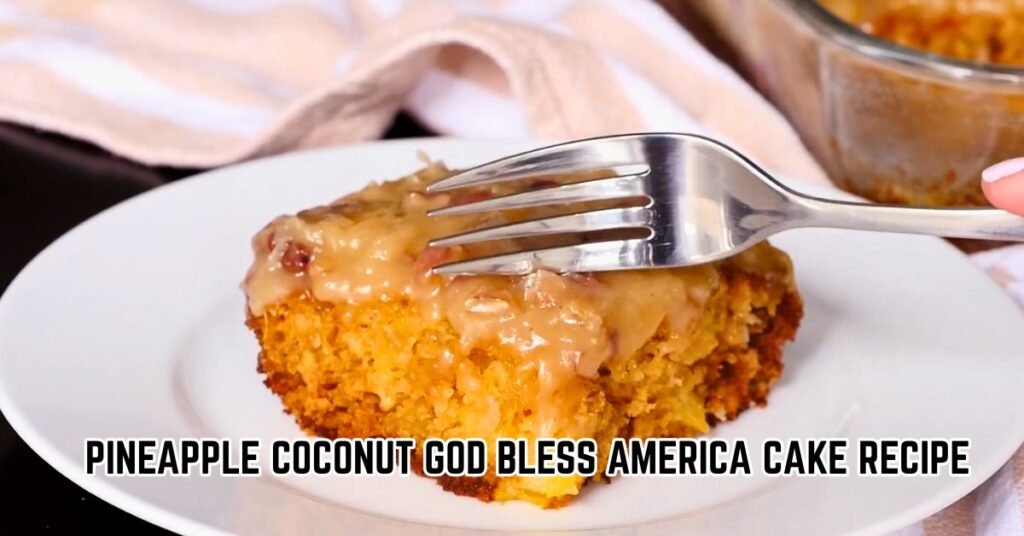
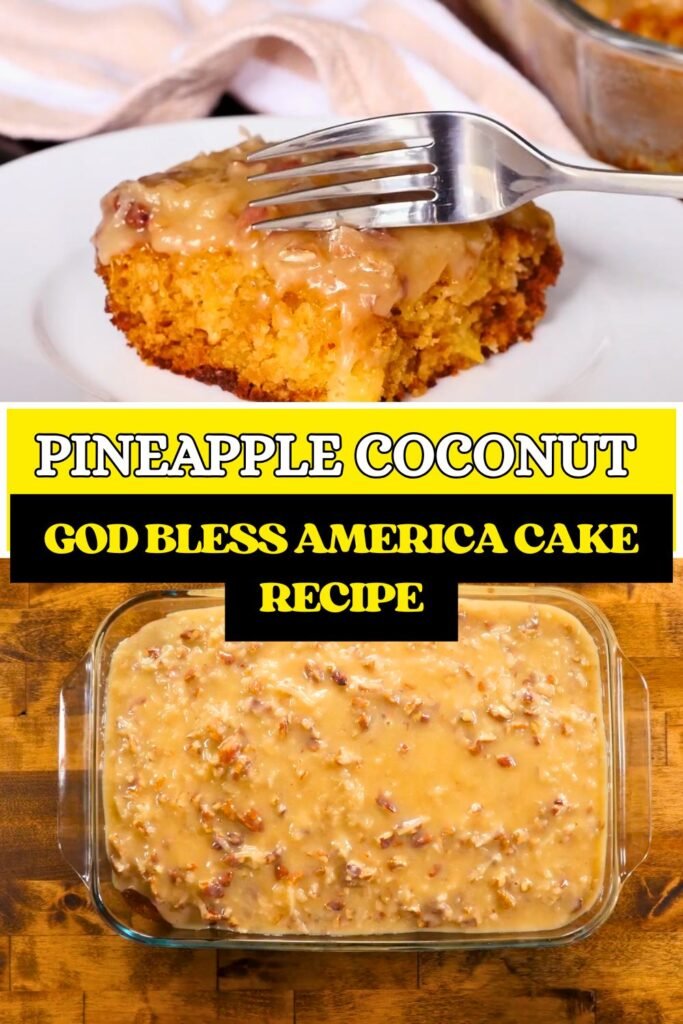
This Pineapple Coconut God Bless America Cake Recipe is a soft, buttery sheet cake loaded with crushed pineapple, shredded coconut, and toasted pecans, topped with a warm frosting that gets poured right over the hot cake. That single step is what makes this cake different from a normal pineapple cake.
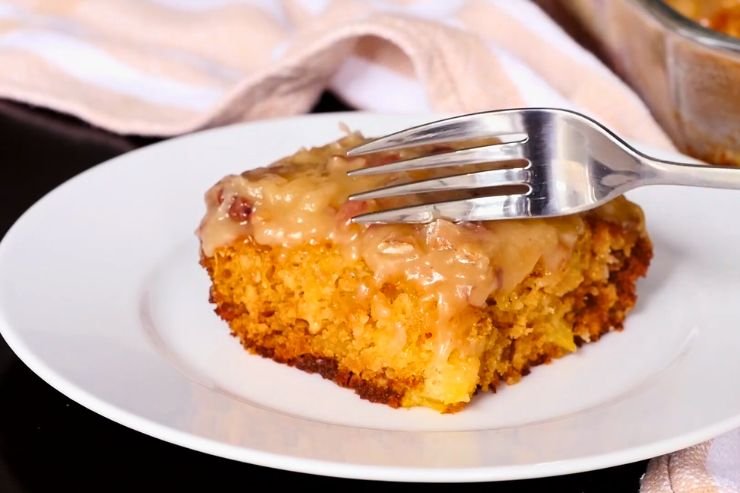
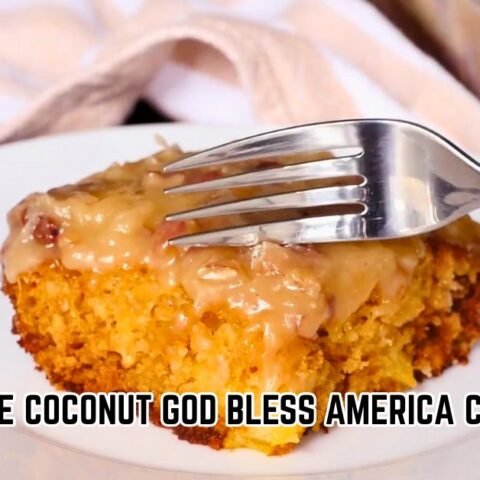
The frosting soaks into the top layer, turning the crumb soft and almost pudding-like beneath a golden, chewy coconut-pecan topping. This baked dish is a favorite at potlucks, cookouts, and Fourth of July tables all over the South, and once it’s on the table, it tends to disappear fast.
The good news is, it’s also one of the easiest cakes you can bake. There’s no layering, no piping bags, and no fancy decorating. You mix the batter, bake it, pour the frosting on top, and you’re done.
What Makes This Southern Sheet Cake So Good
This cake brings together crushed pineapple, shredded coconut, and a cooked coconut-pecan frosting in one simple sheet pan. It’s often called a God Bless America Cake because it’s served at big American gatherings like backyard cookouts and family reunions.
The batter itself uses a full can of crushed pineapple, juice and all, which keeps the crumb soft and moist without needing any extra oil or butter. What makes this version different from a plain pineapple cake is the coconut, mixed into both the batter and the frosting, giving it a richer, more tropical taste than pineapple alone.
The finished cake tastes sweet and buttery, with a soft, slightly dense crumb and a warm, nutty topping that melts slightly into the top of the cake as it cools.
Why This Recipe Turns Out So Well Every Time
The biggest reason this cake tastes so good comes down to one simple move: pouring the warm frosting over the cake the moment it comes out of the oven. That timing matters a lot.
The heat from the cake lets the frosting soak into the top layer, rather than just sitting on top like a normal glaze, and that’s what gives this cake its soft, almost pudding-like texture right under the crust.
This recipe also works great for new bakers, since there’s no layering, cake leveling, or piping at any step. You mix one bowl of batter, bake it in one pan, and pour one pot of frosting over the top.
The ingredient doing the most work here is the crushed pineapple, especially its juice. That juice adds a ton of natural sweetness and moisture to the batter, which is part of why this cake has stuck around in Southern kitchens for so long.
The Real Trick Behind This Cake’s Moist Crumb
The reason this cake turns out so moist comes down to one main thing: crushed pineapple with all of its juice mixed right into the batter. That juice bakes into the crumb, keeping it soft and tender without any extra oil or melted butter added to the mix.
Some bakers worry that all that extra liquid will make the batter too wet, but the amount called for here is exactly right, and the batter should look a little loose and wet before it goes in the oven. Do not drain the can before mixing it in.
The juice is part of the recipe, not something extra. This cake also isn’t meant to be light and fluffy like a normal layer cake. It has a soft, slightly dense crumb, giving it the heavy, comforting texture Southern sheet cakes are known for.
To keep the batter from turning gummy, mix it only until the dry flour disappears, and make sure your oven reaches a full 350°F before the pan goes in. This recipe uses baking soda instead of baking powder on purpose, since the acid in the pineapple juice reacts with the baking soda to give the cake a better rise and a softer bite overall.
What You’ll Need for the Cake and Frosting
2 cups all-purpose flour: Spoon the flour into a measuring cup and level it off with a knife. This method gives you an accurate measurement, which is important for the right texture in your cake.
2 cups granulated white sugar: This sugar adds the right amount of sweetness, balancing the other flavors in your cake.
2 large eggs: Use eggs that are at room temperature. This helps them mix better into the batter, resulting in a smoother cake.
1 teaspoon baking soda: Baking soda is key for lifting the cake and giving it a light, airy texture.
½ teaspoon salt: A small amount of salt enhances the cake’s overall flavor, balancing the sweetness.
1 teaspoon pure vanilla extract: This extract adds a warm and inviting flavor to your cake.
1 can (20 ounces) crushed pineapple, undrained: Choose brands like Dole or Del Monte. Their canning process removes bromelain, an enzyme in fresh pineapple that can affect the cake’s texture.
½ cup (1 stick) unsalted butter: Unsalted butter is best for balanced flavor, but you can use salted butter if that’s what you have; it can add richness.
½ cup evaporated milk: This creamy ingredient makes the batter rich. If you don’t have evaporated milk, you can use regular whole milk instead.
1 cup sweetened shredded coconut; for a less-sweet frosting, use unsweetened coconut. Brands like Baker’s Angel Flake are easy to find and add good texture.
1 cup toasted, chopped pecans: Toasting the pecans enhances their flavor, giving the frosting a nice nutty taste. You can also use walnuts if they are easier to find.
1 teaspoon pure vanilla extract: Adding it again enhances the cake’s flavor and aroma, making it even more delicious.
Handy Tools That Make This So Much Easier
- Use a 9×13-inch metal baking pan. It cooks the batter evenly and is the right size.
- A large mixing bowl holds all the batter because everything can be mixed in it.
- You can use a hand mixer or stand mixer to mix quickly, but a wooden spoon works just as well with some effort.
- You will need a medium saucepan to cook the frosting on the stovetop.
- A rubber spatula helps get every bit of batter into the pan and spreads the frosting evenly when it’s ready.
- Use dry measuring cups and spoons carefully. Too much flour can make the batter dry.
How to Make This Pineapple Coconut God Bless America Cake
Get Ready: Preheat your oven to 350°F. Grease a 9×13-inch pan with butter or nonstick spray, or line it with parchment paper for easier cleanup.
Make the Batter: In a large mixing bowl, mix the flour, sugar, baking soda, and salt. Add the eggs, vanilla extract, and the can of crushed pineapple with its juice. Mix everything with a hand mixer or a wooden spoon until the flour is fully combined. The batter will be loose, wet, and slightly rough, as it should be before baking.
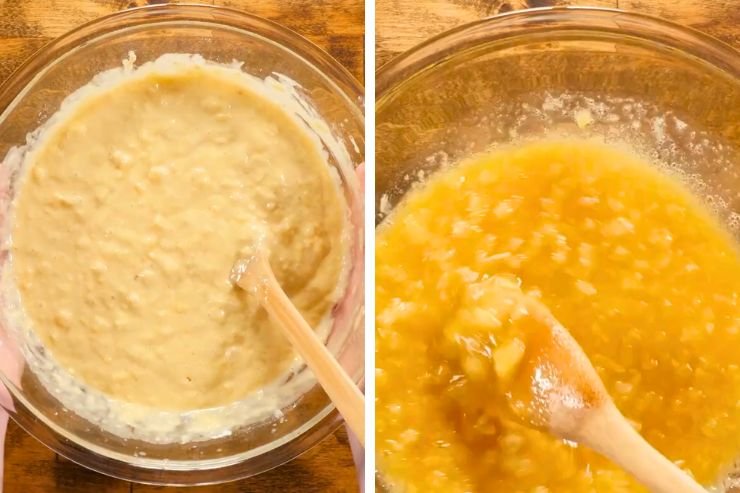
Bake the Cake: Pour the batter into the prepared pan and spread it evenly with a spatula. Bake at 350°F for 30 to 35 minutes. The cake is done when the top is golden brown, the edges pull away from the pan, and a toothpick inserted in the center comes out clean.
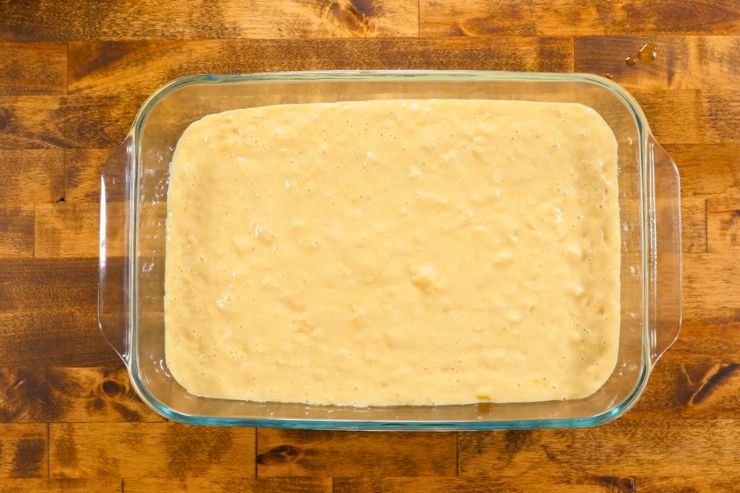
Make the Frosting While the Cake Bakes: About five minutes before the cake is done, start making the frosting. In a medium saucepan over medium heat, combine the butter, sugar, and evaporated milk. Stir continuously until it gently boils.
Let it bubble for 2 to 3 minutes, stirring constantly, then remove it from the heat. Stir in the shredded coconut, toasted pecans, and vanilla extract. The frosting should be warm, glossy, and slightly loose.
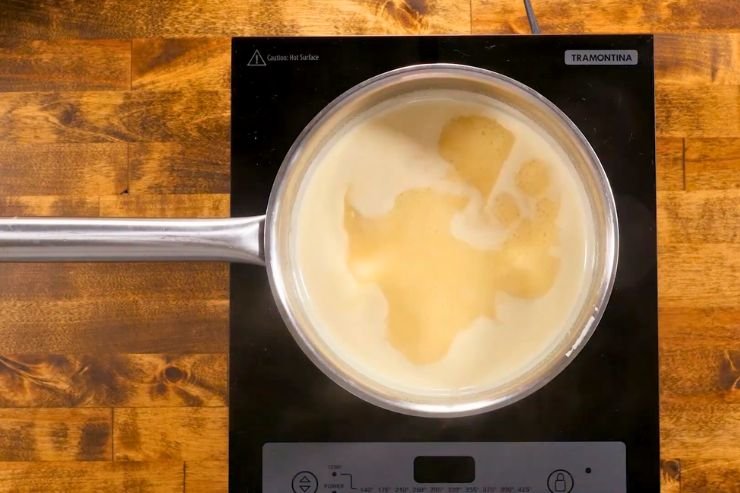
Pour the Warm Frosting Over the Hot Cake: As soon as the cake comes out of the oven, pour the warm frosting over the top. Use a spatula to spread it gently, covering every edge and corner. Pour it on while both the cake and frosting are hot; if you let the cake cool first, the frosting will sit on top instead of soaking in.
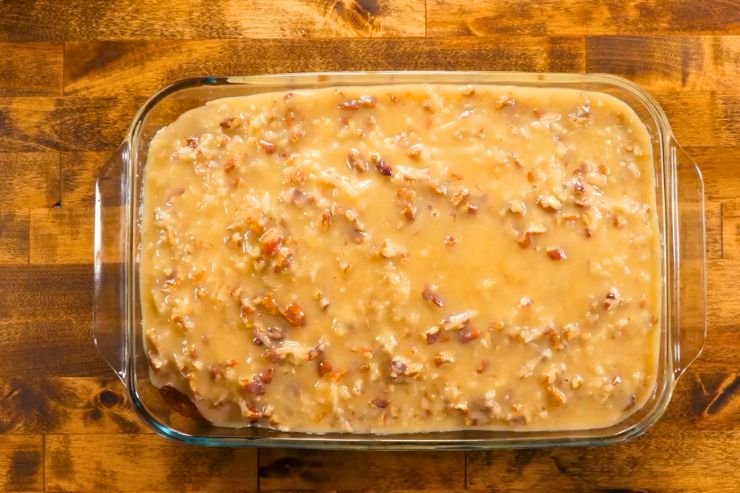
Let It Cool Before Slicing: Allow the frosted cake to sit in the pan for 30 to 45 minutes before cutting. This helps the frosting set and lets the cake firm up enough to slice cleanly.
Tips That Help You Skip the Common Mistakes
Keep the Pineapple Juice: Don’t drain the pineapple juice from the can. Keeping it in the batter helps the cake stay moist and soft.
Don’t Over-Mix the Batter: Mix the batter just until you don’t see any dry flour. If you mix too much, the cake will become dense and chewy.
Toast Your Pecans: Toast the pecans in a dry skillet over medium heat for 3 to 4 minutes. Stir them often until they smell nice. This step adds extra flavor.
Prepare Your Frosting Early: Make your frosting early so it’s ready when the cake comes out of the oven. Both should be hot to help the frosting soak in properly.
Fixing Grainy Frosting: If your frosting is grainy, it means the sugar didn’t dissolve well. Keep stirring and use medium heat.
Troubleshooting a Sinking Cake: If your cake sinks in the middle, you might have opened the oven door too soon or used baking powder instead of baking soda. Use baking soda for this recipe.
Addressing a Wet Cake: If the cake feels too wet after cooling, it might need another 3 to 5 minutes in the oven, or the pan may be too small for the batter.
Fun Ways to Change Up This Recipe
Coconut Extract Enhancement: Stir in a half teaspoon of coconut extract to boost the coconut flavor.
Pineapple Punch in Frosting: Add a few extra tablespoons of pineapple juice to the frosting right before pouring to give the cake more pineapple flavor.
Citrus Zest Brightener: Mix a teaspoon of fresh lime or orange zest into the batter to brighten every bite.
Nut Swap Options: You can swap pecans for walnuts, or leave nuts out altogether for a nut-free option that still tastes good.
Maraschino Cherry Decoration: Press maraschino cherries into the warm frosting for color and added sweetness.
Poke Cake Twist: Poke holes in a warm cake with a wooden skewer, then pour the frosting so it seeps into the cake.
Bundt Pan Variation: You can also use a bundt pan, but drizzle the frosting on the outside instead of pouring it on top.
What Goes Well With This Cake
This cake is rich and sweet enough on its own, so simple pairings work best alongside it. A scoop of plain vanilla ice cream next to a warm slice is a favorite pairing, since the cold, creamy ice cream balances the gooey frosting. Whipped cream works well, especially as a lighter option.
For drinks, sweet iced tea is the classic Southern pick to serve beside it. A cold glass of coconut water plays up the tropical flavors already baked into the cake. A small bowl of fresh pineapple chunks or other tropical fruit on the side adds color and a bit of freshness next to such a rich dessert.
For serving at the table, a little extra toasted coconut or a few pecan halves pressed on top right before serving makes each slice look finished without any real extra work. This cake tastes great at room temperature, though a slightly warm slice is always a good idea too.
How to Store This Cake the Right Way
Once the cake is fully cooled and frosted, cover the pan tightly with plastic wrap or foil and keep it at room temperature for up to 2 days. The flavor actually gets better overnight as the frosting keeps soaking into the crumb.
For longer storage, keep the covered cake in the refrigerator for up to 5 days, since the cake’s moisture helps it hold up better after the first day or two. Let refrigerated slices sit out for 15 to 20 minutes before serving, since the cold firms up the frosting more than you’d expect.
This cake also freezes really well. Cut it into slices, wrap each one tightly in plastic wrap, and place them in a zip-top freezer bag for up to 2 months. Thaw slices overnight in the fridge or on the counter for a couple of hours, and the frosting holds its texture surprisingly well during the freeze-and-thaw.
This is also a genuine make-ahead cake. Bake and frost it a day before you plan to serve it, then cover and refrigerate it overnight. The frosting sets into a soft, almost fudgy layer on top by the next day.
How This Cake Compares to Other Southern Favorites
This cake is often compared to Cajun Cake and Do Nothing Cake, two other Southern desserts built around pouring a warm topping over a hot pineapple batter. The coconut mixed into both the batter and the frosting here is what sets this version apart, giving it a richer, more layered flavor than either of those two.
Next to a pineapple poke cake, this recipe skips the pudding layer entirely and relies solely on the frosting to add moisture to the crumb. Compared to a traditional layered coconut cake, this one is far simpler to pull off, since it bakes in one pan instead of multiple layers that need to be leveled and stacked.
Hummingbird Cake includes bananas and warm spices, which give it a heavier, spiced flavor, while this cake stays brighter and more tropical thanks to the pineapple and coconut alone. It also shares a cooked coconut-pecan frosting with German chocolate cake, so anyone who already likes that frosting will find plenty to like here, too.
Common Questions About This Recipe
1. Can crushed pineapple work in this cake?
Yes, crushed pineapple is exactly what this recipe calls for, since it mixes evenly through the batter and gives the most even moisture in every bite.
2. Can fresh pineapple replace canned?
Canned works better and more reliably here, since fresh pineapple contains an enzyme that can sometimes interfere with how the batter sets during baking.
3. Should the pineapple be drained?
No, keep all the juice in the can. It’s a key factor in keeping the crumb soft and moist.
4. Why did my cake turn out soggy?
This usually comes from underbaking. Give it another 3 to 5 minutes in the oven and check with a toothpick before pulling it out.
5. Can this be made using a cake mix?
Yes. Yellow cake mix serves as a shortcut base. Swap the water called for on the box with the crushed pineapple and its juice, skip the oil, and use the same coconut-pecan frosting recipe listed above.
6. Is this cake better after a day in the fridge?
Yes, the frosting sets and the flavors blend overnight into something even richer than the day it’s baked.
Pineapple Coconut God Bless America Cake Recipe
This Pineapple Coconut God Bless America Cake Recipe is a moist Southern sheet cake with warm coconut-pecan frosting poured on top.
Ingredients
- 2 cups all-purpose flour
- 2 cups granulated white sugar
- 2 large eggs
- 1 teaspoon baking soda
- ½ teaspoon salt
- 1 teaspoon pure vanilla extract
- 1 can (20 ounces) crushed pineapple, undrained
- ½ cup (1 stick) unsalted butter
- ½ cup evaporated milk
- 1 cup sweetened shredded coconut
- 1 cup toasted, chopped pecans
- 1 teaspoon pure vanilla extract
Instructions
- Preheat your oven to 350°F. Grease a 9×13-inch pan with butter or nonstick spray, or line it with parchment paper for easier cleanup.
- In a large mixing bowl, mix the flour, sugar, baking soda, and salt. Add the eggs, vanilla extract, and the can of crushed pineapple with its juice.
- Mix everything with a hand mixer or a wooden spoon until the flour is fully combined. The batter will be loose, wet, and slightly rough, as it should be before baking.
- Pour the batter into the prepared pan and spread it evenly with a spatula. Bake at 350°F for 30 to 35 minutes.
- The cake is done when the top is golden brown, the edges pull away from the pan, and a toothpick inserted in the center comes out clean. About five minutes before the cake is done, start making the frosting.
- In a medium saucepan over medium heat, combine the butter, sugar, and evaporated milk. Stir continuously until it gently boils.
- Let it bubble for 2 to 3 minutes, stirring constantly, then remove it from the heat. Stir in the shredded coconut, toasted pecans, and vanilla extract. The frosting should be warm, glossy, and slightly loose.
- As soon as the cake comes out of the oven, pour the warm frosting over the top. Use a spatula to spread it gently, covering every edge and corner.
- Pour it on while both the cake and frosting are hot; if you let the cake cool first, the frosting will sit on top instead of soaking in.
- Allow the frosted cake to sit in the pan for 30 to 45 minutes before cutting. This helps the frosting set and lets the cake firm up enough to slice cleanly.
Nutrition Information:
Yield: 15 Serving Size: 1Amount Per Serving: Calories: 380
Once this cake comes together in your kitchen, Pineapple Coconut God Bless America Cake Recipe earns its place at the next cookout, potluck, or Sunday dinner table pretty fast.
Between the moist pineapple crumb and that warm coconut-pecan frosting soaking right into the top, this is the kind of dessert that gets asked about by name once people taste it. Try the coconut extract variation next time you bake it, and keep a slice for yourself before the pan empties.