
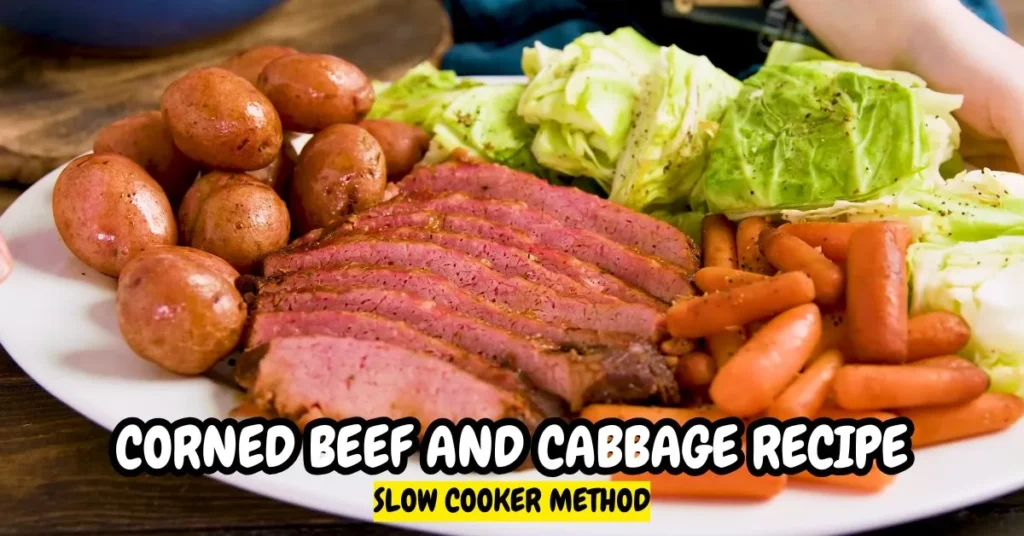
Corned beef and cabbage shows up on my table every March. It arrives right after the last snow melts in our yard outside Boston. My first try at this dish was a mess. I dropped the brisket in a pot, skipped the little spice packet, and boiled it hard and fast.
The meat came out tough. The broth tasted like nothing at all. My husband took two bites and reached for the ketchup. That told me everything.
That failure taught me something simple. This meal wants low heat and time, not a rush. Once I slowed down and used the spice packet, the brisket got soft enough to pull apart with a fork.
The broth turned rich and deep brown. Now this dish is the one my in-laws ask for every spring, and I have the stovetop method down to a routine I barely have to think about.
What Is Corned Beef and Cabbage Made Of?
Corned beef starts as a plain beef brisket, then gets cured in a salty brine with pickling spices like coriander, mustard seed, and bay leaf for about a week before it reaches the store.
The word “corned” goes back to Old English, where “corns” meant large grains of salt, the kind used to pack and preserve meat before refrigerators existed. That cure is what turns the meat pink and gives it a sharp, salty bite you don’t get from a regular roast.
Store shelves usually carry two cuts: flat cut, which is leaner and slices into neat rectangles, and point cut, which carries more fat and shreds well after a long simmer. I buy the point cut most years because my slow cooker version depends on that extra fat to keep the meat from drying out over 10 hours.
The cabbage, potatoes, and carrots that round out the plate soak up the salty broth as everything cooks, which is really where the flavor of the whole dinner comes together.
Is Corned Beef and Cabbage Irish or American?
This question comes up every March, usually from someone who visited Dublin and never saw the dish on a menu there. The short version: corned beef and cabbage grew up in America, not Ireland.
Beef was expensive in Ireland for most of its history, so a traditional Irish plate leaned on bacon boiled with cabbage and potatoes instead.
Irish immigrants who landed in cities like Boston and New York in the 1800s found kosher delis selling brined beef brisket for less than bacon, bought from Jewish butchers in their new neighborhoods. They swapped one cured meat for another, and the dish that came out of that swap became a Spring tradition here, not in Ireland.
My grandmother, who grew up two towns over from Worcester, always said her mother learned the recipe from a neighbor rather than any old family cookbook. That’s the real story behind this plate: an American dish built from a mash-up of immigrant kitchens, not a copy of something shipped over from Ireland.
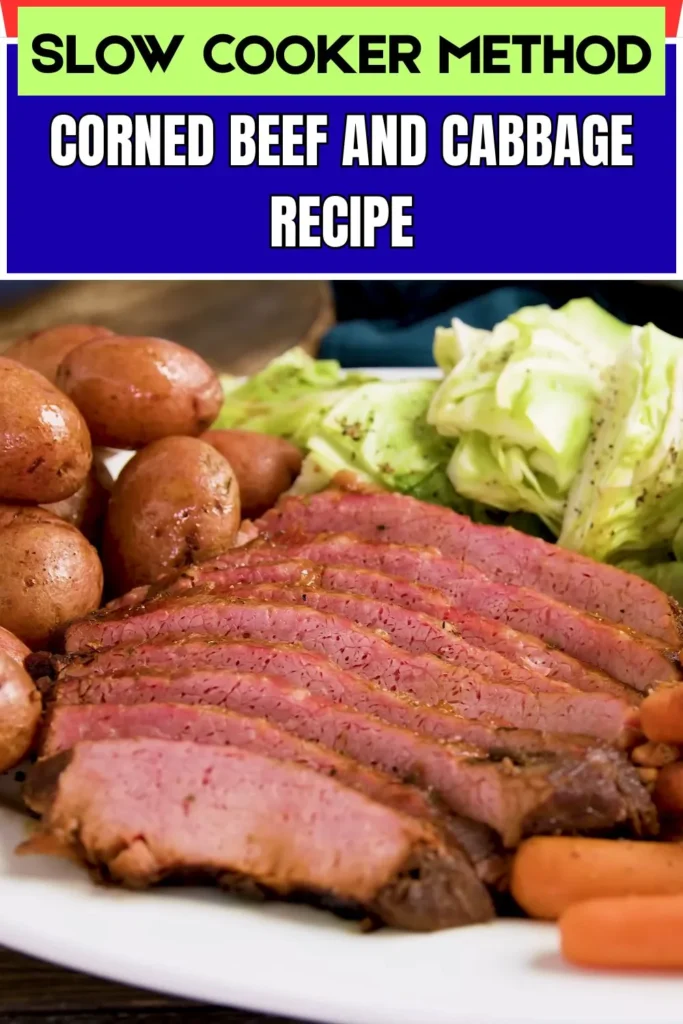
Why the Slow Method Beats the Fast One
Brisket is a tough, well-worked muscle from the cow’s chest, packed with connective tissue called collagen. Boil it hard and fast, and that collagen tightens up, leaving you with dry, chewy meat no matter how long you cook it.
Keep the pot at a bare simmer instead, maybe two or three small bubbles breaking the surface every few seconds, and that same collagen slowly melts into gelatin over 2 to 3 hours, which is what makes the meat fall apart under a fork.
I learned this the hard way with a 3.5-pound brisket that sat at a rolling boil for two hours while I answered emails in the other room. It never got tender.
Since then, I set a timer to check the pot every 20 minutes and pull the burner back down whenever it climbs past a gentle simmer.
Ingredients for Corned Beef and Cabbage
3 to 4-pound corned beef brisket with spice packet: This is the cut that carries the whole dinner, and the flat side slices clean while the point side shreds soft after a long simmer. I reach for the brisket from our local Market Basket meat counter because the spice packet inside actually smells like coriander and mustard seed instead of dust.
Don’t rinse away the brine coating before cooking, since that thin layer is doing a lot of the seasoning work for you.
4 cups beef broth: Broth builds the base flavor of the whole pot instead of leaving you with a watery, flat liquid. I keep a jar of Better Than Bouillon beef base in the fridge and mix it fresh rather than buying boxed broth, since it tastes less salty on its own and lets me control the seasoning later.
Plain water works only when you’re out of options, since the broth is doing real work here.
2 tablespoons soy sauce: Soy sauce rounds out the broth with a savory backbone the brine alone doesn’t give it, cutting through the saltiness instead of adding to it.
Kikkoman is the bottle in my cabinet, and a splash of Worcestershire sauce works in its place when that’s what’s already open on the counter.
1 to 1.5 pounds baby red potatoes: These hold their shape through a long simmer, unlike russets, which tend to fall apart into the broth by the second hour. Cut anything bigger than a golf ball in half so the pieces finish cooking around the same time as the smaller ones.
Yukon gold potatoes carry a similar buttery texture when red potatoes are sold out at the store.
1 cup baby carrots, or 3 to 4 large carrots cut into chunks: Carrots bring a sweetness that balances the sharp, salty brine of the beef, and they need to go in during the last 20 minutes so they don’t turn to mush.
I cut regular carrots into 2-inch chunks on the diagonal, which cooks a little faster than straight cuts and looks better on the plate too.
1 large head green cabbage, cut into thick wedges: Keep the core attached to each wedge so the leaves stay together instead of falling apart into the pot. Cabbage goes in last, since it only needs 15 to 20 minutes to turn soft and take on the broth’s flavor.
Savoy cabbage has a softer, more delicate leaf when that’s what looks best at the store that week.
Salt and black pepper, to taste: The brine already carries plenty of salt into the broth, so hold off adding more until you’ve tasted the liquid after the first hour.
Freshly cracked pepper, ground right before serving, has more bite than the pre-ground kind sitting in most spice cabinets.
Essential Kitchen Tools
- Large 6-quart pot with lid: for stovetop simmering
- 6 to 8-quart slow cooker: optional, hands-off method
- Sharp carving knife: for clean slices
- Large, sturdy cutting board
- Ladle: for serving broth
- Tongs: for lifting hot brisket
- Meat thermometer: checks doneness fast
How to Cook Corned Beef and Cabbage on the Stovetop
Prepare the Pot: Place the brisket fat-side up in a 6-quart pot, pour in the 4 cups of beef broth, add the soy sauce, and sprinkle the full spice packet over the top. The fat cap should sit facing up so it bastes the meat as the liquid heats.
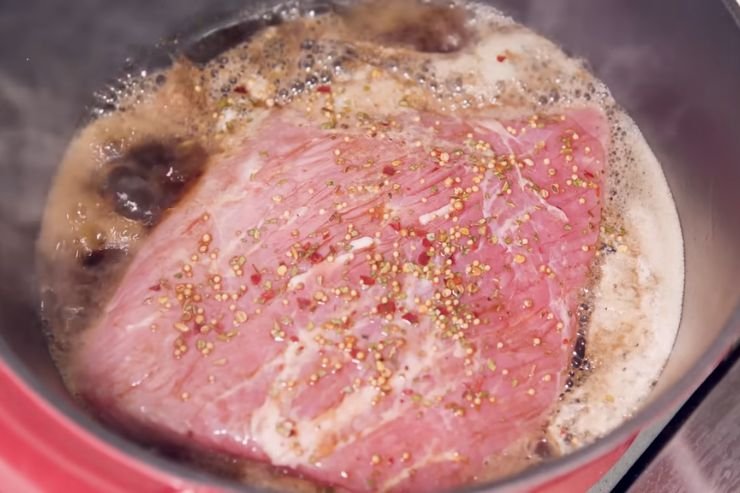
Bring to a Boil: Turn the burner to high until the liquid reaches a full, rolling boil, then drop it down to low right away. A gray foam rises to the surface within the first 5 minutes; skim it off with a large spoon so the broth stays clear instead of cloudy.
Simmer: Cover the pot and let the brisket cook at a bare simmer, watching for just two or three small bubbles breaking the surface at a time. Plan for 45 to 50 minutes per pound, which puts a 3.5-pound brisket around 2 hours and 45 minutes.
When the broth climbs to a hard boil instead of a gentle simmer, the meat tightens up and turns rubbery no matter how much longer it sits on the burner, so check the heat every 20 minutes and pull it back whenever bubbles get too aggressive.
Test for Tenderness: Poke the thickest part of the brisket with a fork around the 2-hour mark. The fork should slide in with almost no resistance and the meat should start to pull apart slightly at the edges; when it still feels firm or springs back, give it another 20 to 30 minutes and test again.
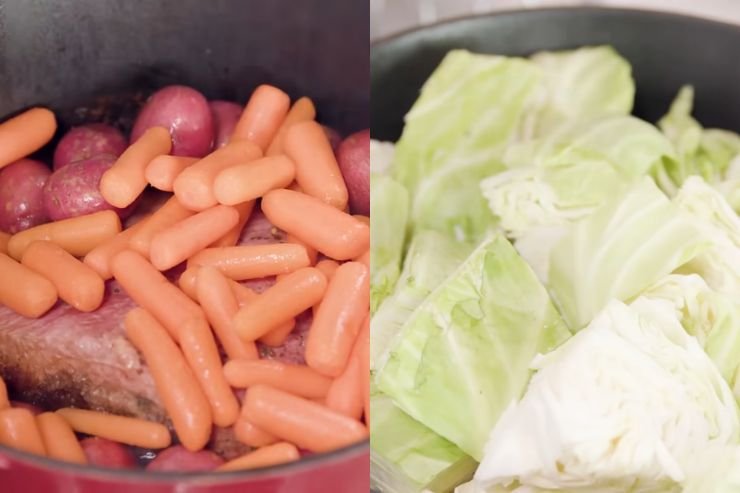
Add Potatoes: Once the meat passes the fork test, add the baby red potatoes to the pot around the brisket. Cover and cook for about 15 minutes, until a knife slides through the largest potato without much push-back.
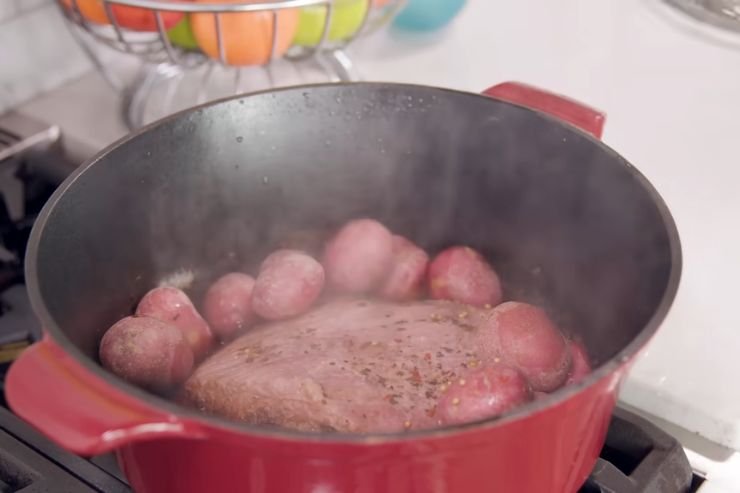
Add Carrots and Cabbage: Tuck the carrot chunks and cabbage wedges into the pot around the meat and potatoes, then bring everything back to a gentle boil.
Season with salt and pepper, cover, and cook for 15 to 20 more minutes, until the cabbage turns a soft, translucent green and a fork slides through the thickest part of the wedge.
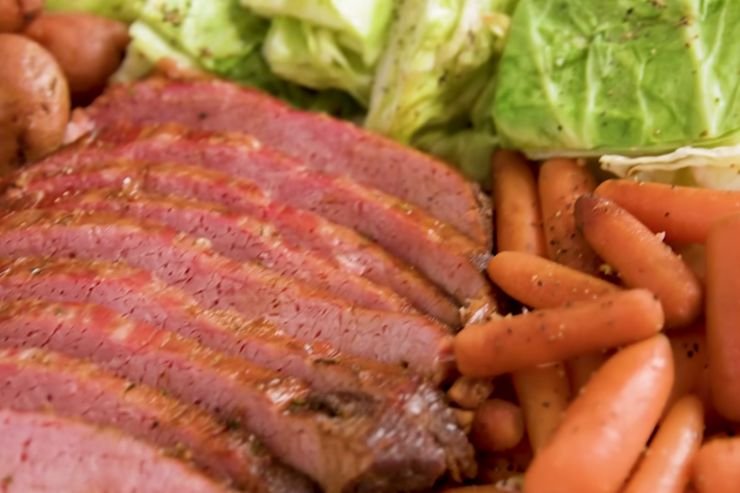
Rest, Slice, and Serve: Lift the brisket out with tongs and let it rest on a cutting board for a full 10 minutes before slicing; cutting too soon lets the juices run onto the board instead of staying in the meat.
Find the direction of the grain and slice across it in thin pieces, then serve with the vegetables and a ladle of broth spooned over the top.
Perfection Tips for Corned Beef and Cabbage
Broth tastes flat after cooking: Stir in an extra teaspoon of soy sauce or a splash of apple cider vinegar right before serving to wake up the seasoning without adding more salt.
Meat shreds instead of slicing clean: The point cut likely cooked past the tender stage; pull it apart on purpose and serve it shredded over the vegetables instead of forcing clean slices.
Cabbage turns bitter: This usually means the core wasn’t trimmed enough; cut a bit deeper into the core before cooking so the wedge cooks evenly without a bitter center.
Broth turns cloudy: Skipping the foam-skimming step in the first 10 minutes is the usual cause; next time, skim twice, once right after boiling and once about 5 minutes later.
Potatoes fall apart: Waxy baby reds hold up better than starchy russets, and cutting them too small speeds up the breakdown, so keep pieces at least golf-ball size.
Meat tastes too salty: Soak the brisket in cold water for 30 minutes before cooking to pull some of the brine out, especially with a smaller cut that takes on more salt relative to its size.
Corned Beef and Cabbage Variations To Try
Mustard-Crusted Brisket: Rub 2 tablespoons of whole grain mustard over the brisket before it goes into the pot, which builds a sharper, tangier crust once the meat rests and cools slightly. This one pairs well with a simple green salad for a lighter Sunday dinner.
Root Vegetable Loaded: Add parsnips and turnips alongside the carrots and potatoes for a heartier version that works better in January than March. The parsnips turn almost candy-sweet after simmering in the salty broth for 20 minutes.
Reuben-Style Leftovers: Layer sliced leftover brisket with Swiss cheese and sauerkraut, add a swipe of Thousand Island dressing, then grill it between rye bread in a buttered skillet until both sides turn golden. This is the version my husband requests the day after, without fail.
Spicy Horseradish Broth: Stir 2 tablespoons of prepared horseradish into the broth during the last 20 minutes of cooking for a version with real heat behind the salt.
How to Store and Reheat Leftovers
After your meal cools, put leftover beef and vegetables in an airtight container. Add some cooking broth to keep the meat moist. You can store it in the fridge for up to 4 days or freeze it for up to 3 months.
Before freezing, slice or shred the beef and place it in freezer-safe bags with broth. To defrost, place it in the fridge overnight.
When reheating, avoid microwaving without liquid, as it can dry out the food. Instead, heat it in a covered skillet with a few tablespoons of broth over low heat.
Leftover corned beef is very versatile. You can use it to make a classic Reuben sandwich, add it to scrambled eggs for breakfast, or prepare corned beef hash.
Easy Corned Beef Hash with Leftovers
Corned beef hash is a tasty way to use leftovers. To make it, dice 1 cup of leftover corned beef and 1 cup of cooked potatoes. Heat a cast-iron skillet over medium-high heat and add 1 tablespoon of butter. Spread the beef and potatoes in the skillet.
Press down with a spatula and cook without stirring for 4 to 5 minutes, until the bottom is brown and crispy. Flip it in sections, press down again, and cook for another 3-4 minutes. Season with salt, pepper, and a little onion powder.
Be patient for the best texture. Don’t stir constantly; let it sit until a crust forms. Make sure the potatoes are cooked before adding them. Raw potatoes won’t crisp up well. A cast-iron pan helps create the best crust. Top your hash with a fried egg and a little hot sauce for a great breakfast.
Corned Beef and Cabbage Recipe FAQs
1. Can I make this in an Instant Pot?
Yes, a 3 to 4-pound brisket cooks in about 90 minutes on high pressure with a natural release for 15 minutes. The broth ends up thinner than the stovetop version, so add the vegetables using the pot’s sauté function once the meat is done rather than pressure cooking them separately.
2. What’s the difference between flat cut and point cut?
Flat cut is leaner and slices into neat, even pieces, while point cut carries more fat and shreds apart easily after a long cook. Choose flat cut for a dinner where presentation matters, and point cut for shredded sandwiches or hash the next day.
3. Why did my broth turn out too salty?
The brine on the brisket is stronger in smaller cuts, since there’s less meat to absorb the same amount of salt during curing. Soak the brisket in cold water for 30 minutes before cooking, changing the water once halfway through, to pull some of that salt out ahead of time.
4. Can I make this a day ahead?
Yes, and it tastes better the next day once the meat has had time to sit in the broth overnight. Reheat everything together in a covered pot over low heat rather than separating the meat from the liquid.
5. Do I have to use the spice packet that comes with the brisket?
It’s not required, but it holds the same warm spices that give the broth most of its depth.
Skip it only when it looks old or smells stale, and replace it with a tablespoon of pickling spice from the grocery store’s spice aisle instead.
6. My cabbage turned mushy. What went wrong?
It sat in the pot too long, past the 20-minute mark where the leaves start to break down completely.
Pull the wedges out with tongs the moment a fork slides through without resistance, rather than leaving them on the heat while the brisket rests.
7. Can I use a different cut of beef instead of corned beef?
Regular beef brisket works, but it needs its own brine or a packet of pickling spice added separately, since raw brisket doesn’t carry the salt cure that gives this dish its color and flavor. The texture after cooking stays close, but the taste turns out noticeably milder.
8. Is this dish very spicy?
No, the spice packet leans toward warm, earthy flavors like coriander and mustard seed rather than heat. Add a spoonful of prepared horseradish or a few dashes of hot sauce at the table for anyone who wants more kick.
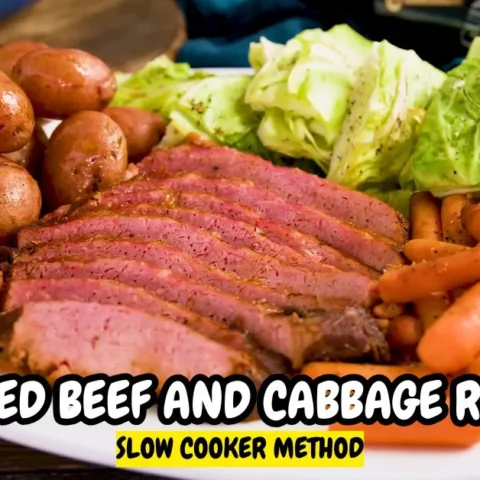
Corned Beef and Cabbage (Slow Cooker Method)
Easy corned beef and cabbage recipe with tender beef, soft veggies, and rich broth. Simple steps for stovetop or slow cooker meals.
Ingredients
- 3–4 pounds corned beef brisket (with spice packet)
- 4 cups beer (like Guinness) or beef broth
- ¼ cup Worcestershire sauce
- 1½ pounds baby red potatoes
- 2 cups baby carrots
- 1 large green cabbage (cut into 6–8 wedges)
- ½ teaspoon black pepper
- Salt (only as needed, near the end)
Instructions
- Place the brisket fat-side up in a 6-quart pot, pour in the 4 cups of beef broth, add the soy sauce, and sprinkle the full spice packet over the top. The fat cap should sit facing up so it bastes the meat as the liquid heats.
- Turn the burner to high until the liquid reaches a full, rolling boil, then drop it down to low right away. A gray foam rises to the surface within the first 5 minutes; skim it off with a large spoon so the broth stays clear instead of cloudy.
- Cover the pot and let the brisket cook at a bare simmer, watching for just two or three small bubbles breaking the surface at a time. Plan for 45 to 50 minutes per pound, which puts a 3.5-pound brisket around 2 hours and 45 minutes.
- When the broth climbs to a hard boil instead of a gentle simmer, the meat tightens up and turns rubbery no matter how much longer it sits on the burner, so check the heat every 20 minutes and pull it back whenever bubbles get too aggressive.
- Poke the thickest part of the brisket with a fork around the 2-hour mark. The fork should slide in with almost no resistance and the meat should start to pull apart slightly at the edges; when it still feels firm or springs back, give it another 20 to 30 minutes and test again.
- Once the meat passes the fork test, add the baby red potatoes to the pot around the brisket. Cover and cook for about 15 minutes, until a knife slides through the largest potato without much push-back.
- Tuck the carrot chunks and cabbage wedges into the pot around the meat and potatoes, then bring everything back to a gentle boil.
- Season with salt and pepper, cover, and cook for 15 to 20 more minutes, until the cabbage turns a soft, translucent green and a fork slides through the thickest part of the wedge.
- Lift the brisket out with tongs and let it rest on a cutting board for a full 10 minutes before slicing; cutting too soon lets the juices run onto the board instead of staying in the meat.
- Find the direction of the grain and slice across it in thin pieces, then serve with the vegetables and a ladle of broth spooned over the top.
Nutrition Information:
Yield: 6 Serving Size: 1Amount Per Serving: Calories: 420
That first pot of tough, bland brisket from two years ago still comes up whenever my husband tells the story to guests, usually right before he asks for a second plate.
The version on this page is the one that fixed it: low heat and real patience through the last hour on the stove, plus a spice packet I no longer skip.
Corned beef and cabbage rewards slow cooking more than any trick or shortcut, and that’s the whole lesson this dish taught me.